Quick Answer
Shopify Google Shopping feed optimization focuses on seven levers: title structure, GTIN accuracy, identifier_exists flag, image dimensions, availability accuracy, price currency match, and custom labels for segmentation. Address all seven before any bid strategy work. Feed quality determines the ceiling of campaign performance.
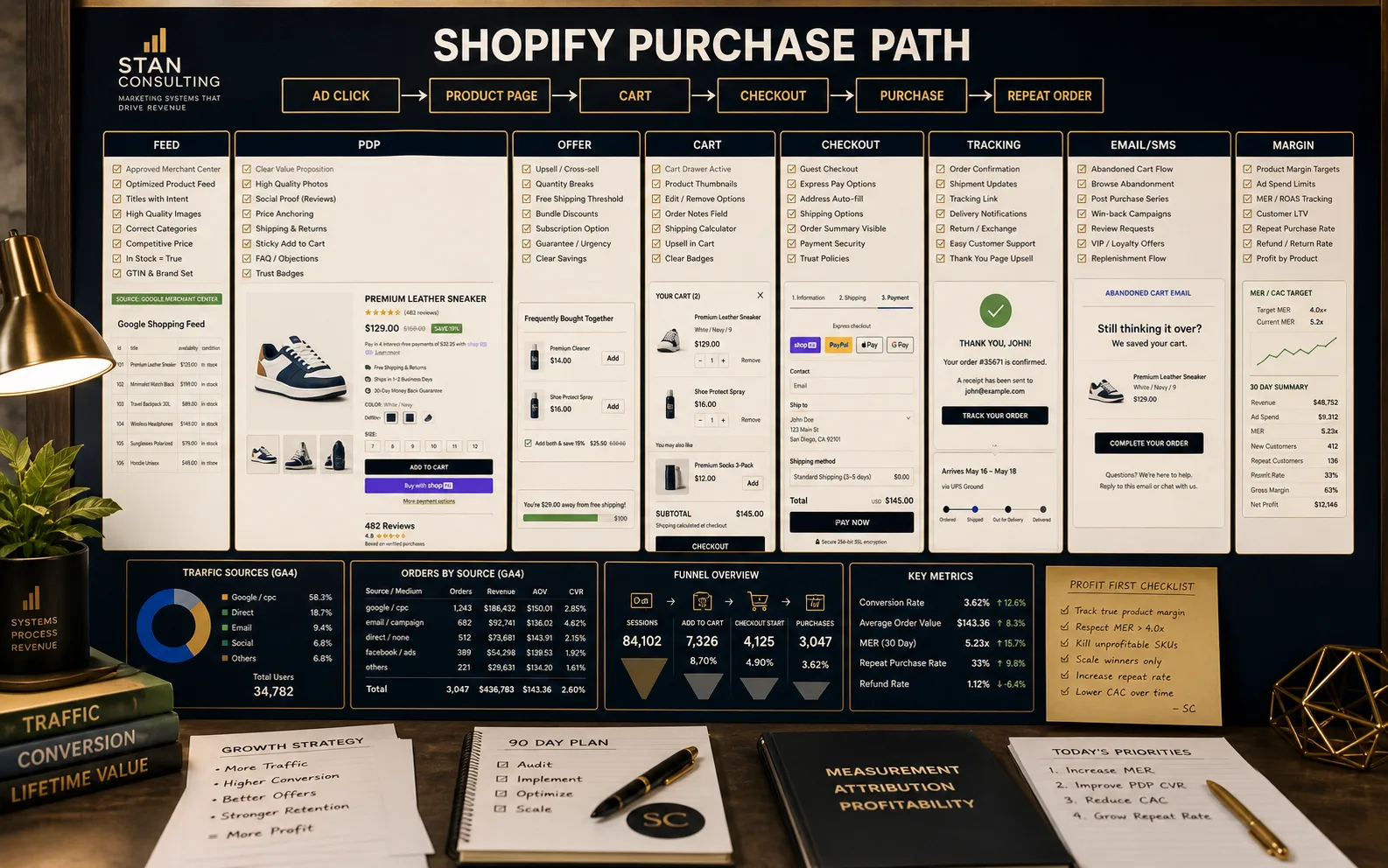
Door 1 · Turn traffic into sales
A better feed only matters when the product page can finish the sale.
Shopping feed repair should not stop at titles and attributes. The feed, campaign, product page, offer, checkout, tracking, and margin all have to support one purchase decision.
- 01FeedTitles, categories, variants, price, availability, and Merchant Center quality.
- 02PageProduct-page proof, offer clarity, shipping, reviews, and reason to buy.
- 03RepairPath to Shopping or Shopify PPC only after the sale path is visible.
Levers 1-3: Identifiers and titles
Title under 150 characters with primary attribute first (brand + product type + key attribute + color + size). GTIN validated against manufacturer. identifier_exists flag set correctly (yes for branded, no for custom/start label).
Levers 4-5: Media and availability
Images at 800x800 minimum, 1200x1200 optimal, on clean backgrounds. Availability updates within 24 hours of stock change. Out-of-stock products disapproved by Google automatically; ensure the flag updates.
Levers 6-7: Economics and segmentation
Price currency matches Ads account currency exactly. Custom labels tag products by margin tier, velocity, seasonality, and promotional status. Labels enable ad-group segmentation downstream.
Common Questions
On record.
How often should I audit the feed?
Weekly Merchant Center review for disapprovals. Monthly full audit against this checklist. Quarterly deep review of custom labels and segmentation logic.
Do I need a third-party feed optimization tool?
Not for catalogs under 1000 SKUs. Shopify Google Shopping app handles the basics. Above 1000 SKUs, tools like DataFeedWatch or GoDataFeed pay for themselves.
What is the most common feed error?
GTIN mismatches. Approximately 30 percent of Shopify stores submit GTINs incorrectly (transposed digits, wrong product, missing).
Should titles include promotional text?
Google disapproves promotional text in titles. Use attribute data only. Promotions go in price and sale fields.
Do custom labels impact bidding?
Not directly. They enable ad group segmentation in Shopping and asset group segmentation in PMax. Segmentation impacts bidding.
The Engagement Format
Begin with the business problem. Then scope the work.
Share the business problem and the relevant account, page, or store. Scope and price are confirmed after intake.
See marketing services