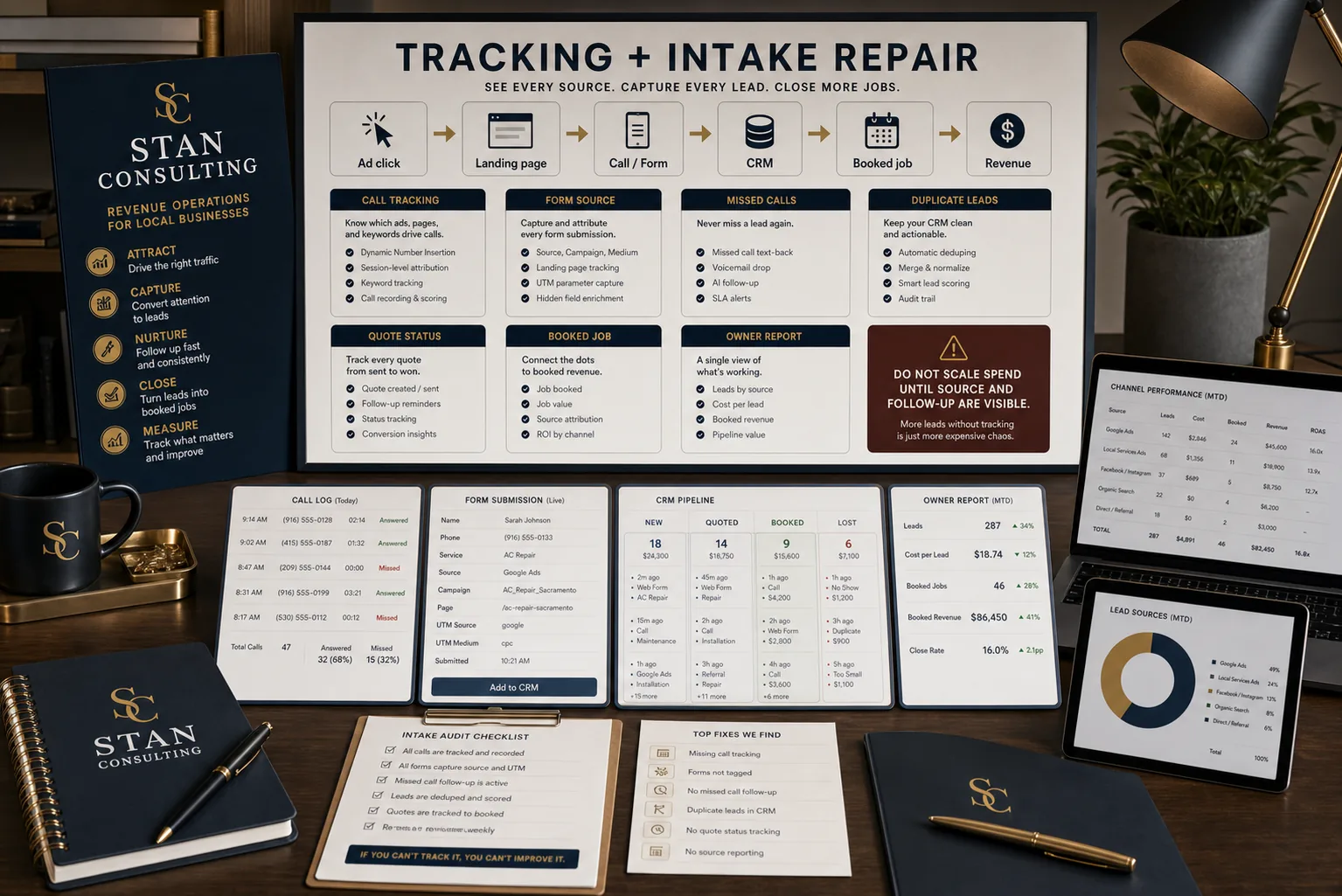
Problems

Follow-up

Calls, forms, quotes, and leads arrive, then lose momentum.
Follow-up. Calls, forms, quotes, and leads arrive, then lose momentum.
Missed calls killing pipeline. Start here when the symptom is already visible in calls, forms, carts, booked work, quotes, demos, or pipeline movement.

Problem

Missed calls killing pipeline

Start here when the symptom is already visible in calls, forms, carts, booked work, quotes, demos, or pipeline movement.
Leads but no jobs. Use this when attention is reaching the business but the next buyer action is weak, delayed, confusing, or hard to measure.

Problem

Leads but no jobs

Use this when attention is reaching the business but the next buyer action is weak, delayed, confusing, or hard to measure.
Tracking six weeks behind. Start here when the symptom is already visible in calls, forms, carts, booked work, quotes, demos, or pipeline movement.

Problem

Tracking six weeks behind

Start here when the symptom is already visible in calls, forms, carts, booked work, quotes, demos, or pipeline movement.

What is happening

Calls, forms, quotes, and leads arrive, then lose momentum.

What to avoid

Do not buy a bigger campaign when the symptom points to message, page, store, tracking, or follow-up friction. More traffic can make the break more expensive.

Where to go next

Move from the problem into the service page that can actually change the buyer path. The goal is a clearer next action, not another explanation.

Diagnose

What this problem usually means.

Follow-up is not a full diagnosis by itself. It is a visible symptom that should point to the next Service.

Find the break.

The break may happen before the click, on the page, inside the offer, during checkout, in search visibility, or after the form. The page should help narrow where attention stops becoming action.

Separate traffic from trust.

More visitors do not solve weak proof, confusing offers, poor local trust, slow reply, or unclear next steps. The problem has to be tied to the moment where the buyer hesitates.

Avoid the expensive reflex.

The expensive reflex is to buy more spend, redesign everything, or start a new channel before the constraint is named. This path keeps the next move smaller and more defensible.

Evidence

What to check before naming the fix.

A problem page should stop the team from treating every symptom as a campaign problem.

Check the source.

Look at where the buyer came from: paid search, paid social, maps, organic search, referral, AI answer, email, marketplace, or direct traffic. The source shapes what a reasonable next action should be.

Check the landing moment.

Review the headline, offer, proof, page speed, contact path, product detail, checkout step, form, phone number, and mobile view. Many problems are page or handoff problems wearing a traffic costume.

Check the follow-up.

If calls, forms, carts, quotes, demos, or appointment requests already happen, inspect response speed, CRM capture, attribution, reminders, proposal return, and nurture before buying more attention.

Next step

Where this page should send the reader.

Follow-up should make the next click more obvious. The page earns its place when it helps a buyer, owner, or team choose the right level of detail.

Stay here for the doorway.

This page is the doorway level. It should explain the situation, name the useful options, and prevent the reader from jumping straight into a deep page before the business action is clear.

Move down for specifics.

Move into the linked service, problem, comparison, industry, or Atlas page when the reader needs the actual mechanics, examples, tradeoffs, or proof behind the next decision.

Move sideways when uncertain.

If the next action is still unclear, move sideways into Learn or Compare. That keeps the site from overbuilding one area while leaving the broader marketing path underbuilt.

Next

Turn the problem into a path.

Problems stay light here. The fix belongs in the service layer once the visible break is clear.

Service match.

Move into the channel, page, store, visibility, or follow-up path that can change the next buyer action.

Check first.

Use a quick check when the symptom is still fuzzy or the team is arguing about the wrong cause.

Decision help.

Use comparison pages when there are two reasonable next moves and both could absorb budget.

Next

Send the page, account, store, or lead path that should be producing more.

Start a Marketing Build

Use this page to decide

How to read Follow-up.

This decision map keeps the page tied to the buyer path: signal, proof, action, and next step. It gives people and search systems a compact way to understand what should happen next.

SignalWhat to check
DemandSource, query, audience, and offer match.
ProofExamples, trust cues, citations, and visible fit.
ActionForm, call, checkout, consult, quote, or start request.
Proof is useful only when it changes the next marketing decision.

Conversion evidence

The weak point is usually between interest and action.

For conversion pages, the page has to make the next action easy, measurable, and believable. The source layer keeps the recommendation tied to observed user behavior, forms, and event tracking.

Sources reviewed July 4, 2026.