
A new website.
For a new business, a new offer or a site you've outgrown. We plan the pages, write the copy and build.
Website design & buildWebsites & landing pages
Show people what you do.
Make it easy to choose you.
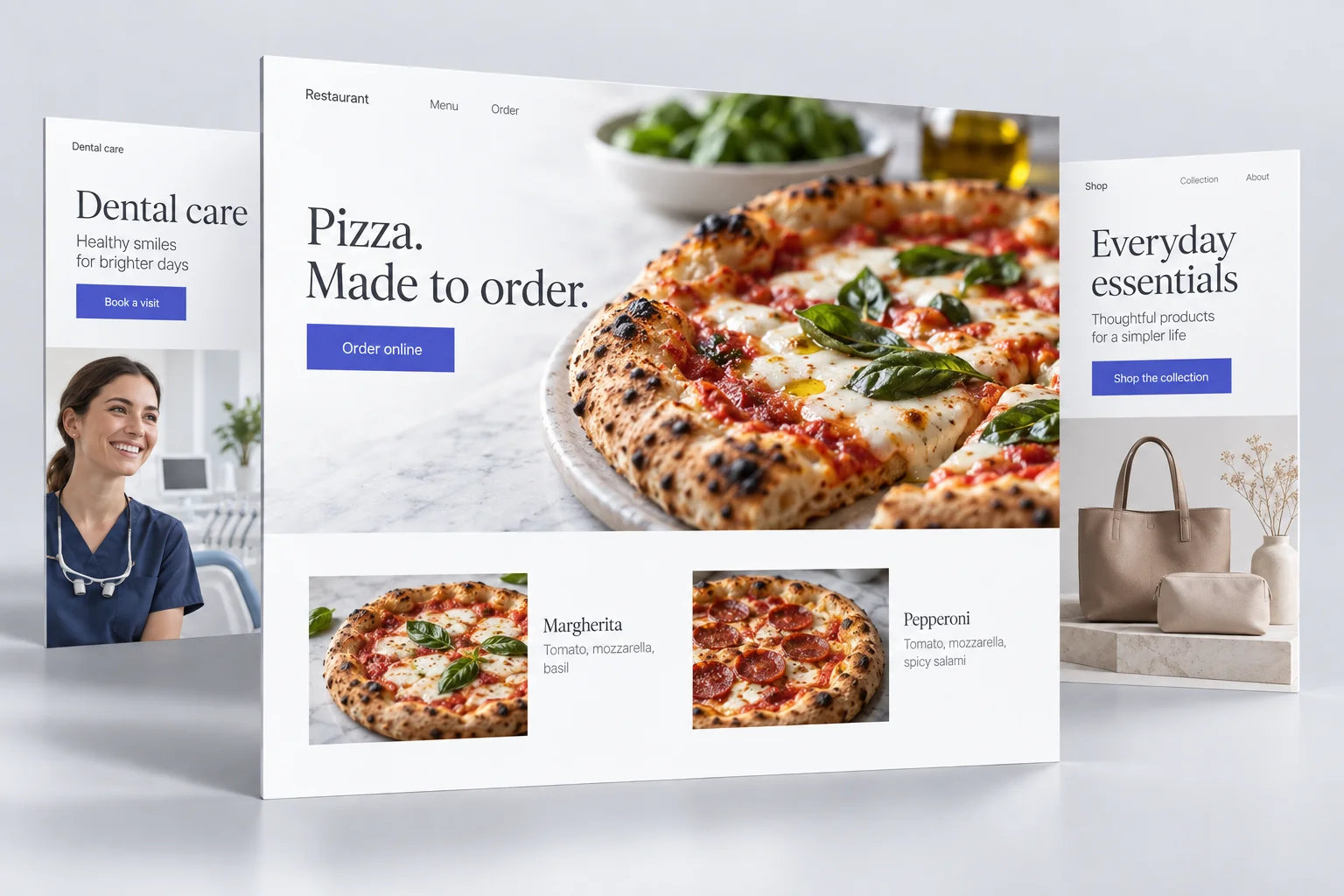
More than a homepage
We bring the words, design and build together. So your customers can find what they need and know what to do next.
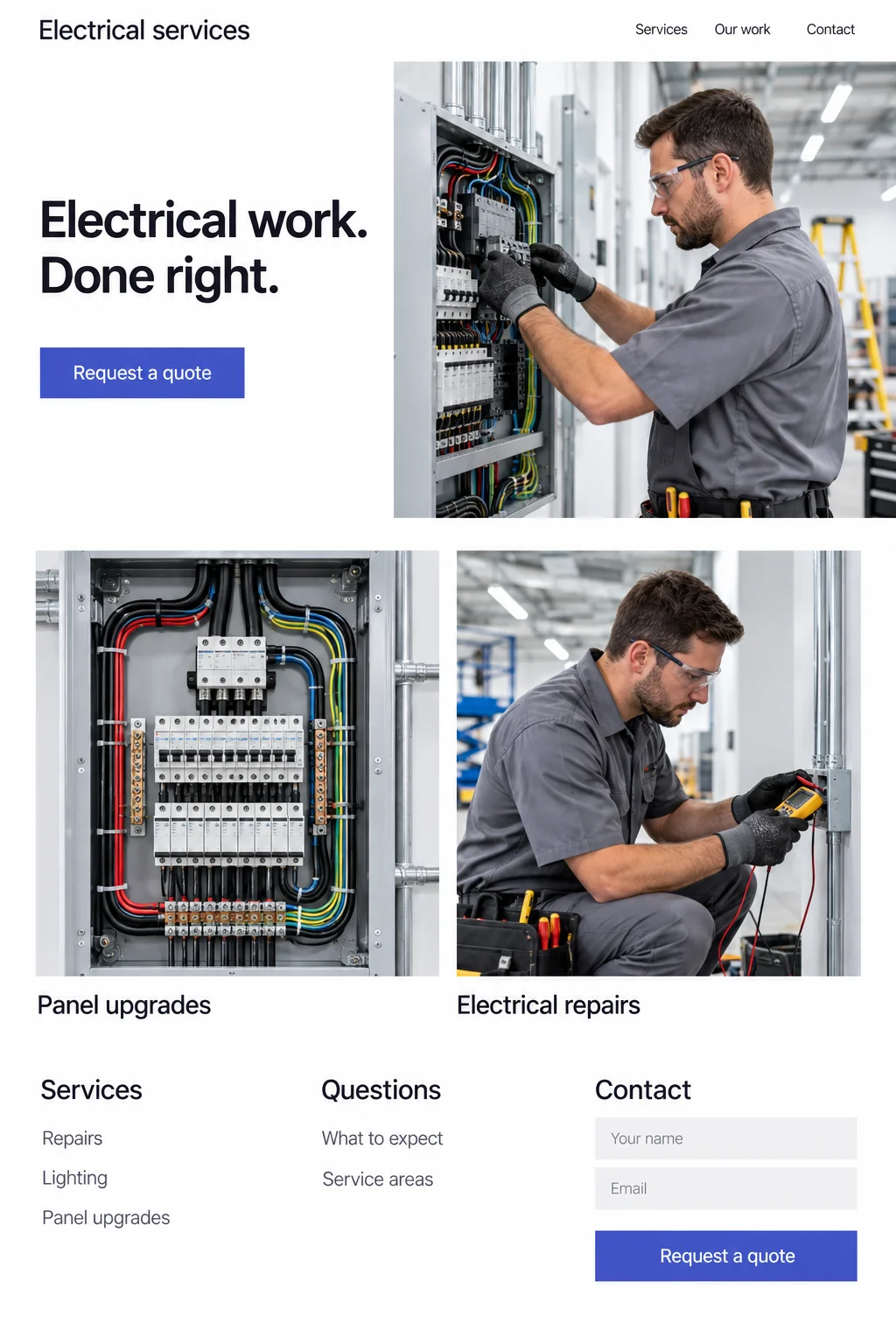
What you do, who you help and how to get started.
Photos and details that help someone choose.
Services, useful answers and contact details where people expect them.
A finished website · Supreme Pizza
We handled website strategy, design, development and technical setup. The restaurant owns its brand, menu and customer relationships; Square provides ordering and payment.
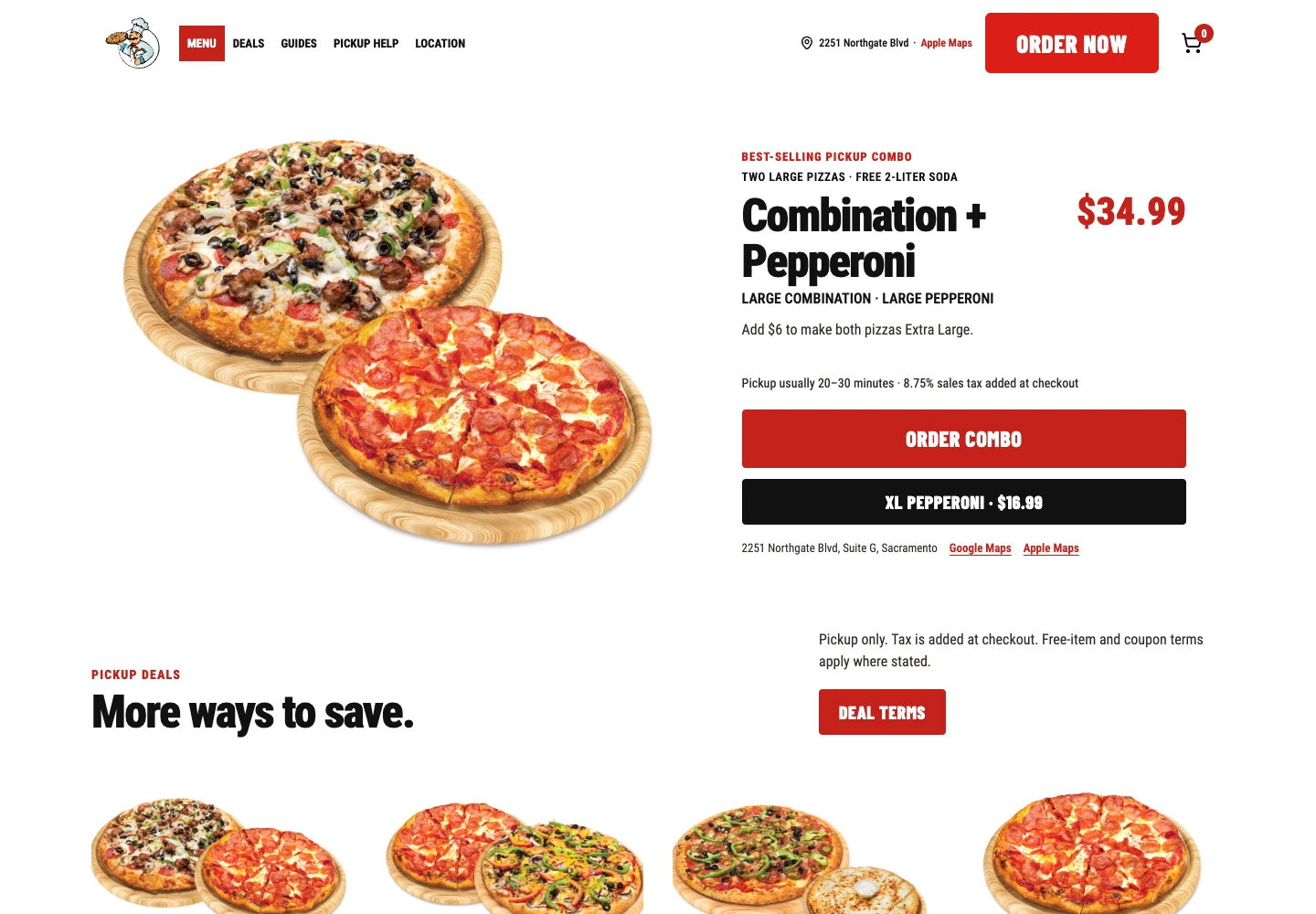
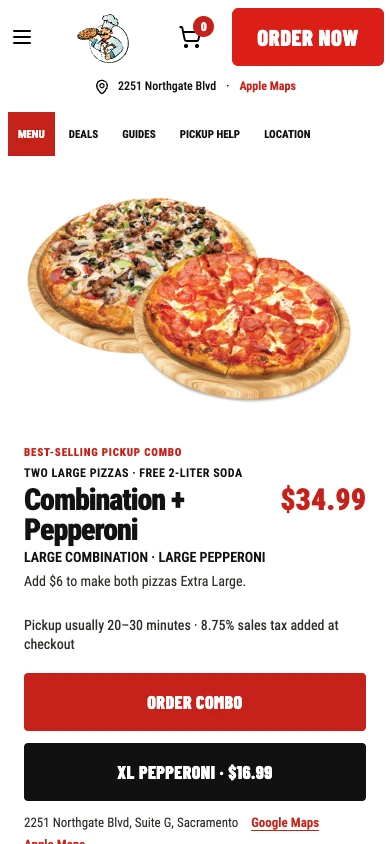
Actual website screens captured October 3, 2026. Visit Supreme Pizza · Website credits
The combo names both pizzas and the included soda beside the food. Customers can compare an actual meal before opening the menu.
The estimated pickup time, tax note and address sit near the order buttons. Customers can see where they are going and what to expect.
Order Combo opens that offer's choices. Customers do not have to search the full menu again for the meal they just saw.
Four website-source orders appear in the September 11, 2026 Square report. That is one day's order-source record, not evidence of a sales trend or a result caused by the design shown here.
Read the order recordFrom looking to asking
A quote request, an appointment or a call. Your website should make that action clear.
We agree where inquiries should go, connect the form and check it before launch.
Improve an existing website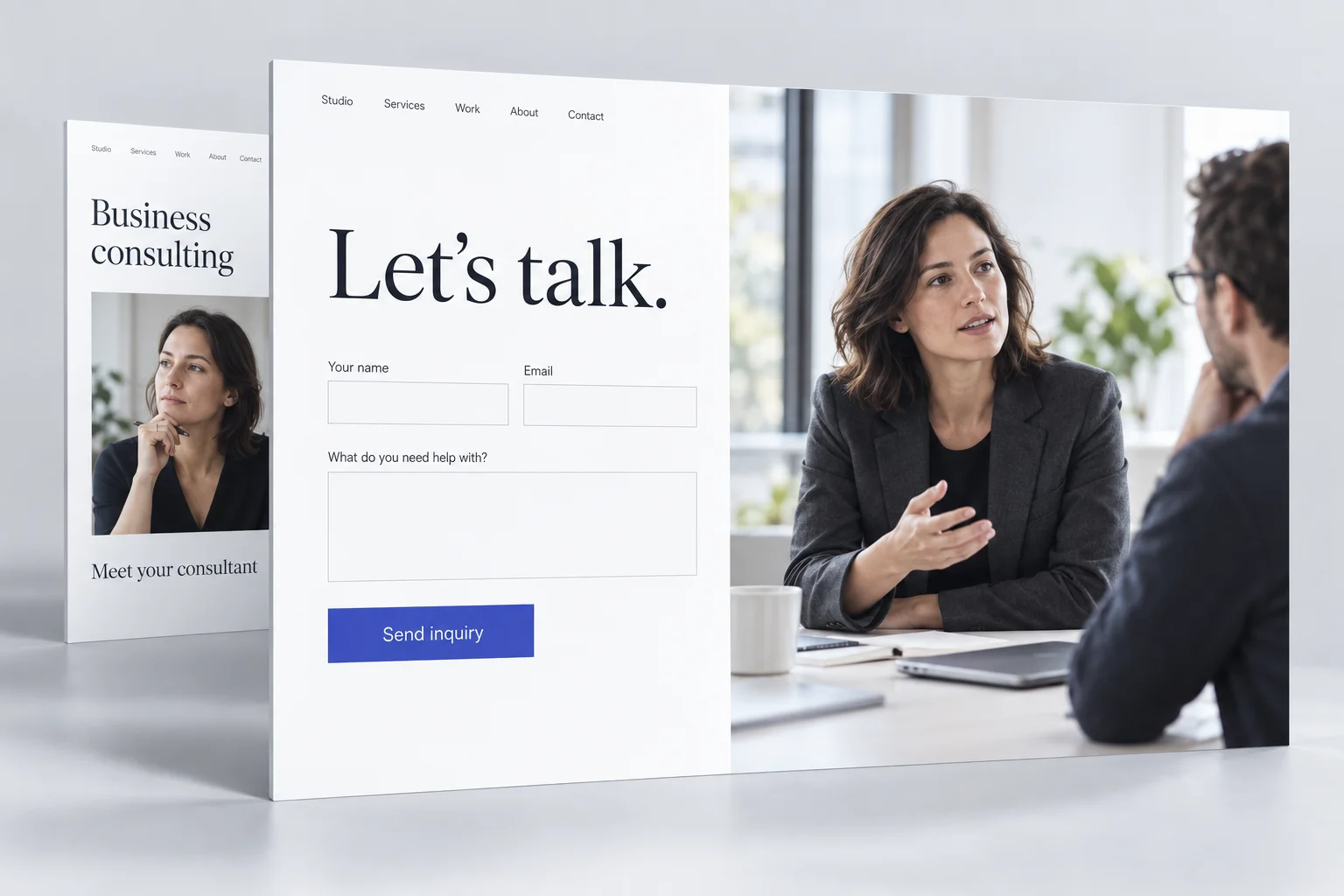
Start where you are
For a new business, a new offer or a site you've outgrown. We plan the pages, write the copy and build.
Website design & build
Keep what works. Improve the pages, navigation or forms that are making it harder to get inquiries.
Website improvements
One offer, one audience and one next step. A focused page for a campaign or launch.
Landing page designSelling products online? See ecommerce websites.
The price depends on the pages, content and features you need. Send us a short brief. We'll confirm the scope and price before work starts.
Yes. Share your website and what you'd like to change. You may need a few better pages rather than a full rebuild.
Redesign or improve what you have?A website gives visitors somewhere to learn and get in touch. It still needs a way to reach them. Ongoing search work and paid campaigns are separate services we can discuss.
Start with what they see: the offer, the page and the way to contact you. Check that the form works and that someone receives the message.
Read the website conversion guideNew website or a change to your current one?
Tell us what you have in mind.