Paid click protection
The wrong destination page makes a good click behave like bad traffic.
Before judging the channel, check whether the visitor landed in the right conversation. A Shopping buyer wants product certainty. A cold social buyer wants the ad promise continued. A skeptical high-AOV buyer needs proof before price.

Quick answer
Choose the shortest page that can finish the buying decision.
Send high-intent shoppers to a product page when they already know the item. Use a landing page when the click came from one campaign promise. Use a sales page when the offer needs more explanation, comparison, or risk reduction before checkout feels reasonable.
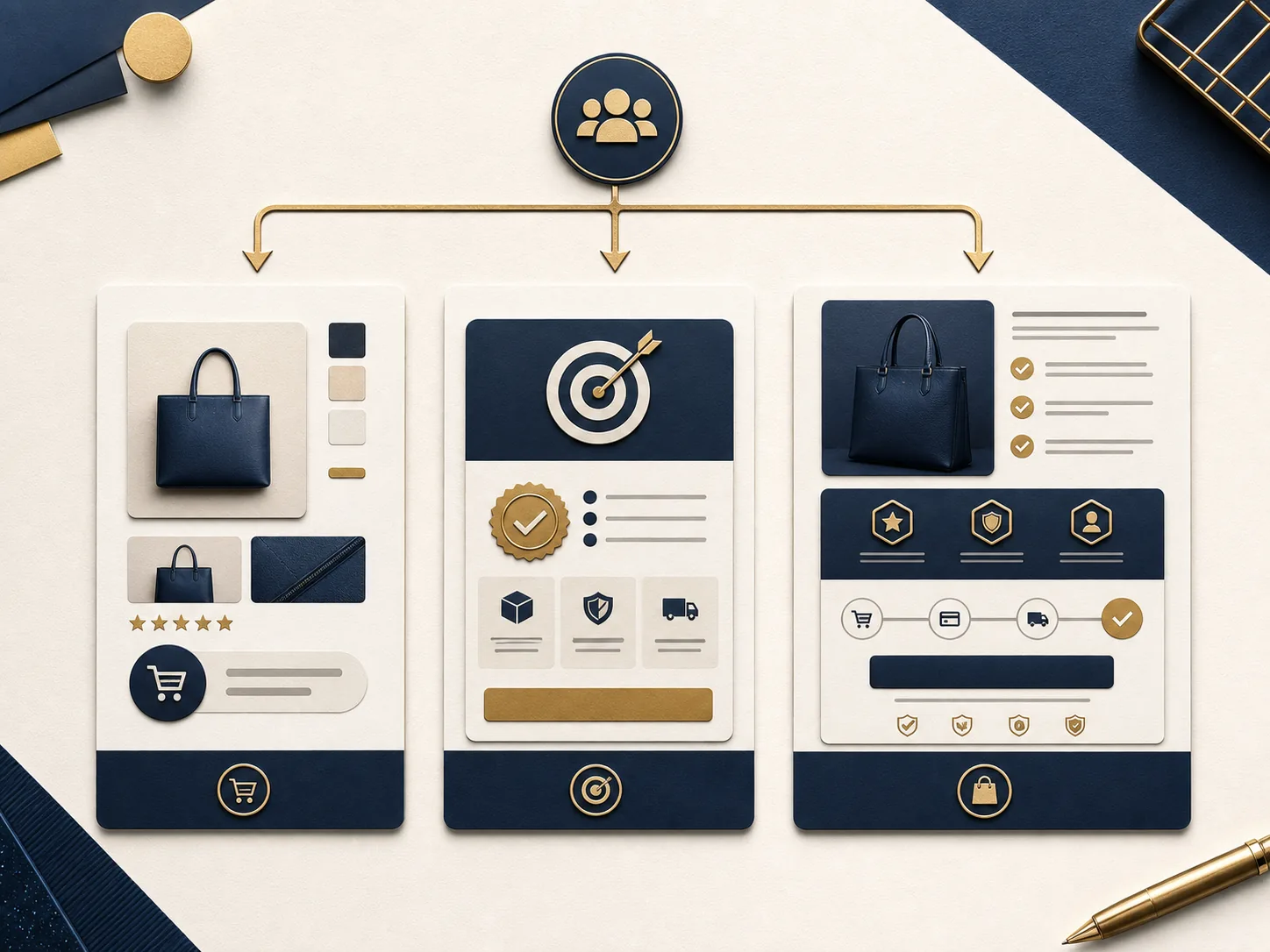
 Send here when
Product page
The buyer is close to the product. They searched the brand, clicked Shopping, returned from email, or came back through retargeting.
- Exact product or SKU intent
- Product feed and Shopping traffic
- Low proof burden
- Fast add-to-cart path
 Send here when
Landing page
The ad created a promise the normal product page does not repeat fast enough. Cold social traffic is the usual case.
- One campaign angle
- One audience segment
- One product, bundle, quiz, or offer
- Proof tied to that ad
 Send here when
Sales page
The buyer needs a longer argument before checkout. Price, risk, novelty, or comparison friction is doing the damage.
- Higher AOV or bundle
- Subscription or replenishment offer
- New category education
- Proof, objection, and guarantee stack
Buyer-intent layer
The page is wrong when it answers the wrong buyer state.
Start with the job inside the visitor's head. Template choice is only useful after that job is clear.
The buyer searched a product, SKU, brand, or category. They need clarity, not a longer pitch.
Product pageThe ad created interest. The page must repeat the promise and remove catalog distractions.
Landing pageThe buyer needs mechanism, proof, comparison, and risk reversal before checkout feels reasonable.
Sales pageThe decision in one screen
Pick the page by the job the click brought with it.
Most ranking articles compare two page types. That is why the answer often feels right and still fails inside an ecommerce account. Paid traffic is not one thing.
A branded Google search, a TikTok cold click, a YouTube demo click, and a cart retargeting click do not arrive with the same question in their head. Sending all of them to the same page is how the store starts paying for confusion at auction prices.
Traffic-source rule
The same product can need three different destination pages.
Google's own ad guidance puts weight on message match, useful landing page content, mobile usability, and easy navigation. That does not mean every ad needs a stripped landing page. It means the destination should satisfy the intent that caused the click.
Shopping and product feeds
Start with the product page. The shopper expects the exact item, price, options, delivery, reviews, and checkout path.
Branded search
Use the product, collection, or offer page closest to the query. Do not slow a ready buyer with a manifesto.
Cold paid social
Use a landing page when the person clicked an angle, a pain point, a creator proof, or a bundle promise.
High-friction offers
Use a sales page when the buyer must understand the mechanism, compare alternatives, or trust the guarantee.
Email and SMS
Warm traffic can go direct to product or collection. Use a landing page only when the promotion needs context.
If the ad sells a moment and the page opens with a catalog, the click lands in a different conversation. That is the expensive part.
Page type 1
Use a product page when the buyer is already near the SKU.
A product page is the right destination when the buyer is shopping more than learning. They want price, images, variants, stock, shipping, returns, reviews, and a clear add-to-cart button.
That is why product pages matter for Shopping ads, branded search, product SEO, email, and retargeting. The shopper has already done some of the persuasion work in their own head. The page's job is to avoid getting in the way.
Shopify's own product page guidance centers on the basics that remove purchase hesitation: imagery, description, pricing, reviews, CTA visibility, and mobile usability. A store does not need a clever PDP before those are handled.
For a deeper PDP check, use the Shopify product page conversion architecture guide after this one.
Page type 2
Use a landing page when the ad made a promise.
A landing page should feel like the next sentence after the ad. Same audience. Same problem. Same offer. Same proof style. Same CTA.
This matters most when the buyer is cold. They did not ask for your catalog. They responded to a hook, a creator, a comparison, a discount, a use case, or a pain point. The landing page has to make that click feel intentional.
A paid-traffic landing page needs these before polish
- A headline that repeats the commercial promise without bait-and-switch language.
- Proof above the first major scroll: review, demonstration, press, before-after, founder note, or product result.
- One CTA path. Buy, claim offer, build bundle, take quiz, or sign up.
- Objections answered in the order buyers feel them: price, trust, fit, time, delivery, returns.
- Mobile first layout. Most cold social clicks arrive with a small screen and less patience.
If your Google Ads click volume is high and conversions are weak, run the Google Ads landing page problem check. If the page has proof but still feels soft, use the landing page trust gaps guide.
Page type 3
Use a sales page when the buyer reaches price before belief.
A sales page is a longer persuasion path for an ecommerce offer that carries more risk. The risk can be money, setup time, health claims, technical fit, subscription commitment, style confidence, or fear of buying the wrong version.
This page type earns the checkout. It explains the mechanism, proves the result, compares alternatives, handles objections, and repeats the CTA at points where belief has increased.
A sales page can still sell through Shopify. The point is not the platform. The point is the amount of explanation required before the buyer has enough confidence to act.
Shopify-specific trap
Do not turn every Shopify product page into a campaign page.
Shopify product pages serve product feeds, organic search, collection browsing, internal search, retargeting, email, and returning customers. If every PDP becomes a long cold-traffic pitch, the store can get slower and harder to shop.
The better move is guidance. Keep the PDP strong for shoppers who already want the product. Build campaign landing pages for cold angles. Use sales pages when the offer needs a longer argument.
Use this when sessions, carts, and spend are present but purchases are not following.
do it yourself path Open Shopify conversion problemsUse this to separate traffic quality, PDP friction, cart drop, and checkout leaks.
Service page Shopify marketing PPCUse this when the store needs account, page, and offer marketing services before more spend.
When this becomes work
Match the build to the leak, not by the page label.
Once the page type is clear, the next decision is where the revenue path is actually breaking. A Shopify PDP problem, a campaign landing-page problem, and a whole-site conversion problem need different work.
Use this when traffic is arriving but the page, CTA, proof, form, or tracking layer is not earning the next action.
Build plan Landing page designUse this when a paid campaign needs one audience, one promise, one proof path, and one conversion action.
Shopify path Shopify CROUse this when product pages, cart, checkout, trust, and measurement need to be tested as one purchase path.
Related problem Landing page not convertingUse this when ad clicks arrive, but the first screen, proof, message match, or CTA fails to move the buyer.
Related problem Website not convertingUse this when the issue is wider than one campaign page and the site is not producing leads, calls, or purchases.
Book a callThe test plan
Do not test page type in the abstract. Test the mismatch.
A product page can beat a landing page when the buyer already wants the exact item. A landing page can beat a product page when the ad promise needs context. A sales page can beat both when belief is the missing step.
That means the test should start with a hypothesis about the visitor, not with a preference for a page template.
Split traffic
Separate branded, Shopping, cold social, creator traffic, retargeting, email, and high-ticket campaigns.
Open the first screen
Check the ad promise against the headline, visual, proof, offer, and CTA visible on mobile.
Score proof burden
Mark price risk, brand trust, product novelty, comparison pressure, delivery concern, and return anxiety.
Change one layer
Test destination type, first-screen message, proof order, or CTA path separately so the result is clear.
Judge by money
Use add to cart, checkout starts, purchases, CPA, MER, AOV, lead quality, and refund pressure. CTR alone is too early.
Next step
THE CLICK
The right question is not "which page converts better?" The right question is "what job did this click arrive to finish?"
Research and competition gap
What the current ranking pages do, and where this guide goes further.
The live SERP is heavy on two-way comparisons. Several pages explain landing page vs product page for Shopify or paid traffic. Others explain landing page vs sales page. Few make the three-way ecommerce decision practical across Shopping, cold social, branded search, retargeting, higher AOV, bundles, and proof burden.
That gap matters because ecommerce teams do not buy page labels. They buy traffic and then watch the money land somewhere. The destination page has to match the source, not the glossary definition.
Google frames landing page quality around relevance, usefulness, mobile experience, and easy navigation. That supports message match and intent guidance.
Shopify's product page guidance centers on imagery, pricing, descriptions, reviews, CTA clarity, trust, mobile usability, and measurement.
Fudge, The Good, EasyAppsEcom, and 100xelevate mostly focus on PDP vs landing page. This article adds the missing sales-page branch and test logic.
Common Questions
On record.
What is the difference between a landing page and a product page in ecommerce?
A product page sells a specific SKU inside the store catalog. A landing page is built for one campaign, audience, or offer. The product page helps a shopper compare details and buy. The landing page continues the promise that caused the click.
Should ecommerce paid traffic go to a product page or a landing page?
Cold paid social and campaign-specific search traffic usually need a landing page. Branded search, shopping traffic, warm retargeting, and SKU-specific searches can go to a product page when the page already answers price, proof, variants, shipping, returns, and availability.
When should ecommerce use a sales page?
Use a sales page when the product is expensive, unfamiliar, bundled, technical, subscription-based, or hard to compare. A sales page carries more proof, comparison, objections, guarantees, and repeated calls to action than a normal product page.
Should Shopify ads go to a product page or a landing page?
Send Shopify ads to a product page when the buyer searched for the exact product, brand, or SKU. Send cold Meta, TikTok, YouTube, influencer, or offer-specific traffic to a landing page when the ad angle needs to be repeated and proven before the buyer sees the full catalog.
Can one ecommerce page act as all three page types?
Sometimes, but only if the page has one dominant job. Most ecommerce stores lose conversion when one page tries to be a catalog page, ad landing page, and long-form sales page at the same time.
What should be tested first if clicks are high but sales are low?
Test message match before small design changes. The ad promise, page headline, product proof, CTA, and offer should line up in the first screen. If they do not, the wrong page type can waste traffic even when the product is good.
Does a landing page replace the product page?
No. The landing page handles the campaign job. The product page still matters for catalog browsing, organic search, product feeds, retargeting, email, and buyers who want SKU-level details before checkout.
Campaign-to-page fit
Still deciding where the next click should land?
Share the campaign, current page, store, and purchase action. Stan Consulting will scope the relevant landing-page, Shopify, or conversion work after intake.
Have us run it