Meta workspace comparison
Meta Ads Manager vs Business Suite
Use Business Suite for day-to-day publishing, messages, and a simple overview. Use Ads Manager for campaign build, targeting, budget, bidding, testing, and detailed ad reporting. Most advertising teams use both.
On this page
Direct answer
Choose the workspace by task.
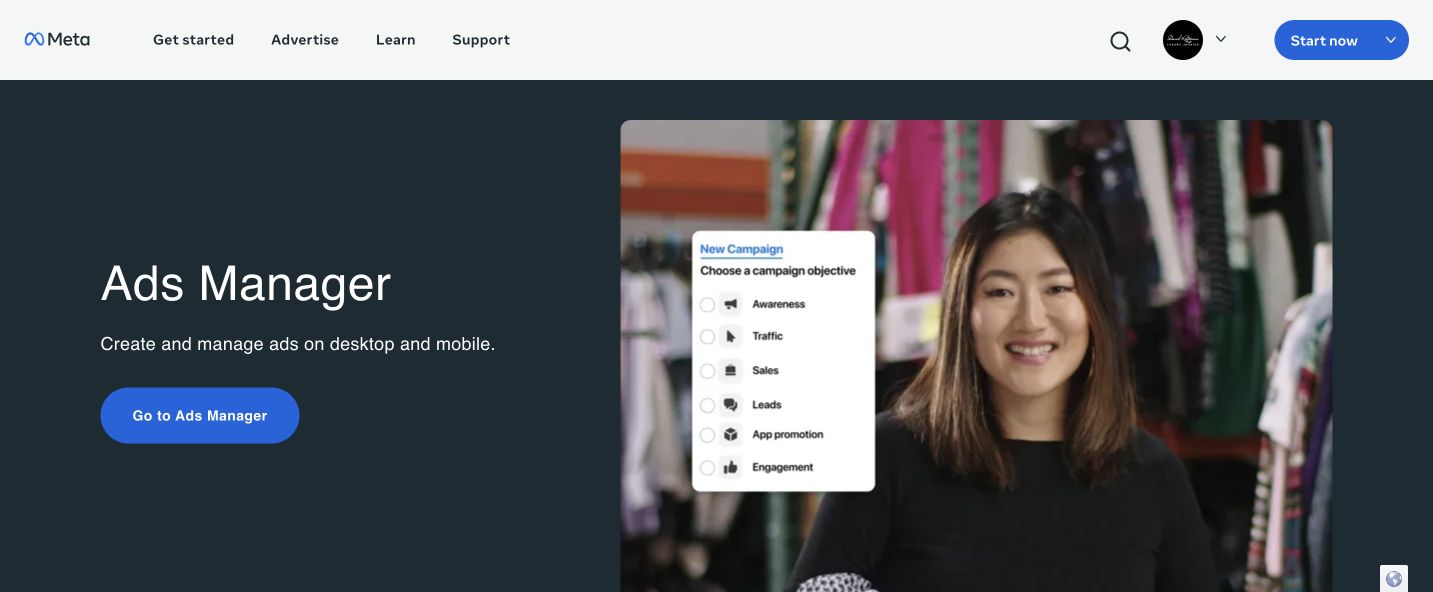
Meta Business Suite is the operating home for content, messages, notifications, and a high-level view across Facebook and Instagram. Ads Manager is the deeper paid-media workspace for campaigns, ad sets, ads, budgets, audiences, placements, optimization, experiments, and reporting.
The ownership layer matters too. A Meta Business Portfolio, often still called Business Manager in older guidance, organizes Pages, Instagram accounts, ad accounts, people, partners, billing, and data sources. Events Manager handles pixels, datasets, Conversions API connections, and event diagnostics. A business advertising seriously will often touch all four layers.
For campaign work, see advertising services. If a provider controls the account, use the agency performance guide. The marketing guides cover the next operating questions.
Task selector
Which Meta tool should you open?
| Task | Primary workspace | Owner check |
|---|---|---|
| Schedule Facebook and Instagram posts or Reels | Meta Business Suite | Confirm the correct Page and Instagram account are connected. |
| Reply to comments and messages | Meta Business Suite Inbox | Give only the permissions needed for customer communication. |
| Build a campaign with ad-set controls | Ads Manager | Use the business-owned ad account and documented billing source. |
| Control audiences, placements, budget, bidding, and optimization | Ads Manager | Record who can publish and who approves material changes. |
| Check pixel, dataset, app, or Conversions API events | Events Manager | Confirm the business owns the data source and domain connection. |
| Add an employee or agency partner | Business Portfolio settings | Grant scoped access; do not transfer asset ownership to the vendor. |
| Review invoices or payment settings | Billing and payments for the ad account | Keep a business administrator and a current payment contact. |
When to use each
Three realistic operating setups
Solo owner
Business Suite may be enough for daily work
Use it for posts, messages, notifications, and a simple view. If you only boost occasionally, understand that the simplified flow offers fewer campaign controls than Ads Manager.
In-house marketer
Use Suite and Ads Manager together
Business Suite manages the organic and inbox work. Ads Manager runs paid campaigns. Events Manager checks the measurement feeding those campaigns.
Agency relationship
Add the ownership layer
The business keeps the Page, Instagram account, ad account, pixel or dataset, domain, and billing. The agency receives partner access to the assets in scope.
Access checklist
Before an agency touches the account
- Confirm the legal business controls the Business Portfolio and has at least two current administrators.
- Confirm the business owns the Page, Instagram account, ad account, dataset or pixel, and verified domain.
- Add the agency as a partner when possible instead of adding personal profiles with broad access.
- Grant only the assets and permission level required by the signed scope.
- Record the ad account, currency, time zone, billing source, and who approves spend changes.
- Check conversion events in Events Manager and name which events affect delivery and reporting.
- Keep campaign naming, change notes, creative files, and reporting exports in business-controlled storage.
- Document the removal and handoff steps before the engagement starts.
Interfaces change. Meta can rename menus and move controls. Recheck the current product help and the live account before using an old screenshot as an instruction.
Common mistakes
What the two-tool comparison usually misses
Business Suite is not the ownership model
It is a workspace. Asset ownership and partner access live in the business settings layer.
Ads Manager is not the measurement source
It reports campaign outcomes, but Events Manager and the business's own systems are needed to check what the conversion represents.
A boosted post is still an ad
The simpler flow can be useful, but it does not provide the same build, test, and reporting controls as Ads Manager.
More access is not better access
People and partners should receive the minimum permissions needed for the job, with an owner who can remove them.
Common questions
Answers without a sales pitch
Do I need both Meta Business Suite and Ads Manager?
Use both when you publish organic content or handle messages and also run structured paid campaigns. Suite supports daily communication; Ads Manager provides deeper advertising controls.
Is Business Manager gone?
Meta increasingly uses Business Portfolio and Business Suite language, while older pages and users still say Business Manager. The important distinction is the asset-and-access layer versus the day-to-day workspace.
Should an agency own my ad account?
No. The business should control the Business Portfolio, Page, Instagram account, ad account, data sources, domain, billing, and files. Give the agency scoped partner access.
Where do I check conversion events?
Use Events Manager to inspect the pixel, dataset, app events, or Conversions API connection. Then verify the event against analytics, commerce, CRM, or lead records.
Primary sources
What the platform documentation supports
These sources support the facts on this page. They do not disclose complete ranking systems or guarantee a recommendation, citation, click, lead, or appointment.
- Meta: Ads ManagerMeta’s product overview for paid campaign management.
- Meta: Business SuiteMeta’s product overview for content, messages, and insights.
- Meta Help: Page accessCurrent Page access concepts and permissions.
- Meta Business Help CenterCurrent account, asset, billing, and measurement guidance.
- Meta: Conversions APIServer-side event connection and data responsibilities.
- Meta: Pixel setupWeb event data source setup.
- Meta: Reels ads workflowAn example of ad creation through Meta advertising tools.
- Shopify: Meta Business Manager guideIndependent current terminology and setup context for retailers.
- Meta Privacy CenterPrivacy controls and data-use context.
- Meta: Account securitySecurity practices for business assets.
Set up Meta so the business keeps control.
Stan Consulting can connect the asset structure, campaign workflow, event measurement, and reporting without taking ownership away from the client.
Request a quote