
Problem

Problems
Problem

Problem

Problem
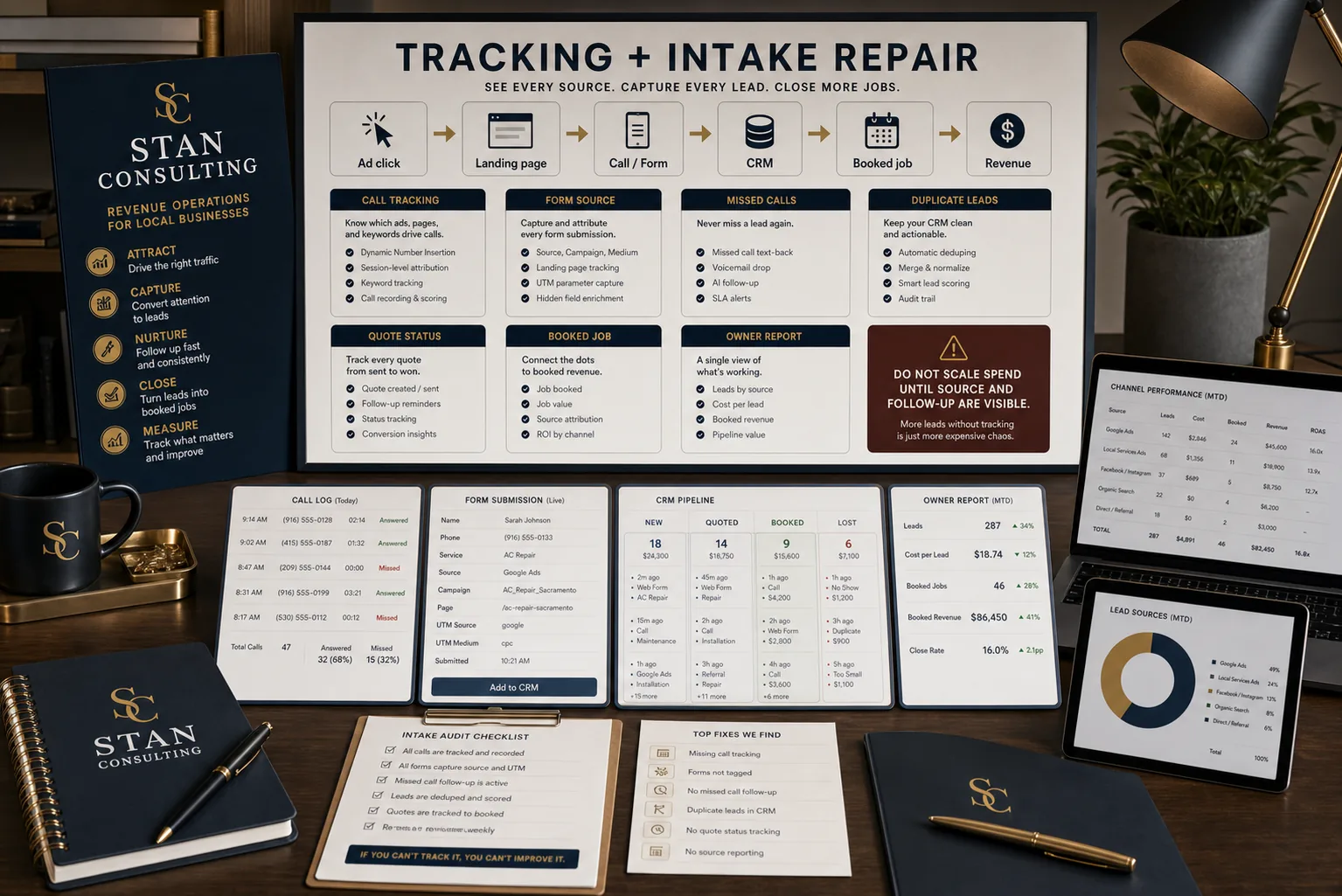
Problem
People arrive, but the business does not get sales movement.
Do not buy a bigger campaign when the symptom points to message, page, store, tracking, or follow-up friction. More traffic can make the break more expensive.
Move from the problem into the service page that can actually change the buyer path. The goal is a clearer next action, not another explanation.
Diagnose
The break may happen before the click, on the page, inside the offer, during checkout, in search visibility, or after the form. The page should help narrow where attention stops becoming action.
More visitors do not solve weak proof, confusing offers, poor local trust, slow reply, or unclear next steps. The problem has to be tied to the moment where the buyer hesitates.
The expensive reflex is to buy more spend, redesign everything, or start a new channel before the constraint is named. This path keeps the next move smaller and more defensible.
Evidence
Look at where the buyer came from: paid search, paid social, maps, organic search, referral, AI answer, email, marketplace, or direct traffic. The source shapes what a reasonable next action should be.
Review the headline, offer, proof, page speed, contact path, product detail, checkout step, form, phone number, and mobile view. Many problems are page or handoff problems wearing a traffic costume.
If calls, forms, carts, quotes, demos, or appointment requests already happen, inspect response speed, CRM capture, attribution, reminders, proposal return, and nurture before buying more attention.
Next
Move into the channel, page, store, visibility, or follow-up path that can change the next buyer action.
Use a quick check when the symptom is still fuzzy or the team is arguing about the wrong cause.
Use comparison pages when there are two reasonable next moves and both could absorb budget.
Next