Quick Answer
Target ROAS on Shopify Google Ads is calculated from contribution margin, LTV-to-first-order ratio, and acceptable payback period. Default industry numbers (4x, 5x) are rarely correct for specific stores; run the calculation.
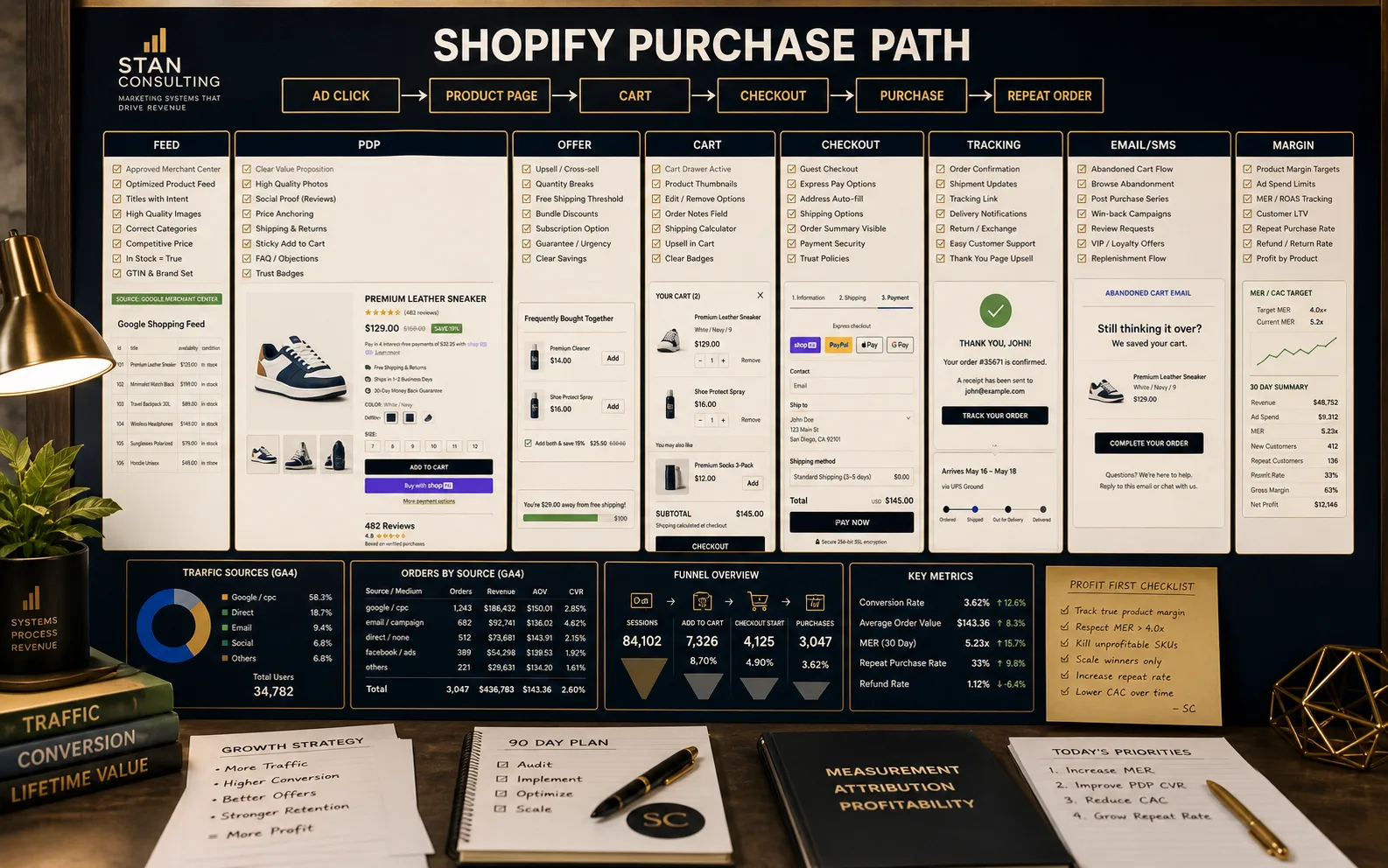
Door 1 · Turn traffic into sales
If the ROAS target looks right but profit does not, assess the whole purchase path.
The calculator provides the math. The next buyer decision is whether the store, feed, tracking, margin, product page, checkout, and repeat-purchase path agree with that math.
- 01Check the mathUse margin, payback, and LTV instead of a platform default.
- 02Check the pathOpen feed, PDP, cart, checkout, and tracking together.
- 03Choose the repairPath to Shopify PPC when the account and store path must be viewed together.
The calculation
Target ROAS = (1 / contribution margin) × (1 / LTV multiplier) × payback adjustment. Example: 25 percent contribution margin, 2x LTV, 90-day payback = Target ROAS around 2.0x, not the 4x default. Before setting any Target ROAS, confirm the campaign has the conversion volume to support automated bidding at all; the 20-minute bid-strategy audit walks through the campaign-level signal, tracking, value, budget, and volatility checks.
Common mistakes
Using gross margin (overstates ROAS target). Assuming LTV equals first-order revenue (understates target). Ignoring payback period (common in VC-funded stores).
Common Questions
On record.
What contribution margin should I use?
Contribution = gross margin minus variable costs (payment processing, shipping, returns reserve).
What LTV multiplier is typical?
There is no universal LTV multiplier. Calculate it from realized cohort revenue, contribution, refunds, and the chosen window.
Should I set Target ROAS lower to scale?
Temporarily, yes. Scale-phase Target ROAS is lower than profit-optimized Target ROAS.
Does this apply to Performance Max?
Yes. PMax uses the same Target ROAS input.
How often should I recalculate?
Quarterly. Margins shift, LTV extends with cohort maturity, payback expectations change.
The Engagement Format
Begin with the business problem. Then scope the work.
Share the business problem and the relevant account, page, or store. Scope and price are confirmed after intake.
See marketing services