Australia and France receive different currency sets
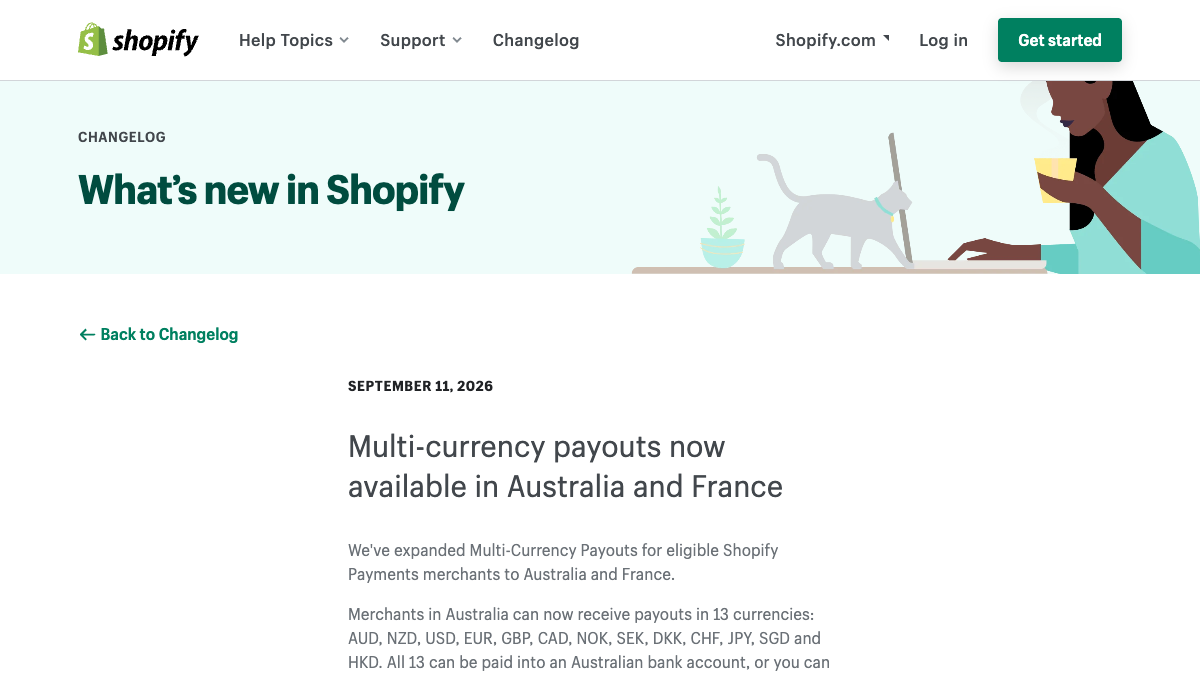
Shopify expanded Multi-Currency Payouts on September 11. Eligible Australian merchants can receive 13 currencies, while eligible French merchants can receive 18.
Australian merchants can send all 13 currencies to an Australian bank account or add accounts in several supported regions. French merchants keep EUR as the default and add accounts for other currencies.
Settlement choice changes the reconciliation job
Holding a sale currency can reduce unnecessary conversion in some setups, but it also adds bank accounts, currency balances, and accounting entries. The payout option should match a real supplier, refund, advertising, or treasury need.
Before enabling a currency, compare Shopify's payout treatment with the bank's fees and the accounting process used to match orders, refunds, and deposits.
Plan eligibility is the first check
Shopify limits the feature to eligible stores on the Advanced and Shopify Plus plans. A store should verify the feature in its own Payments settings before changing bank arrangements.
Our recommendation: start with one high-volume currency, reconcile a complete payout cycle, and record the total cost before expanding the setup.
For your next work session
What to check next
- Confirm Advanced or Plus plan and Shopify Payments eligibility.
- List sales, refund, supplier, and advertising flows by currency.
- Compare Shopify and bank conversion and account fees.
- Test one currency through a complete payout and refund cycle.
- Document the reconciliation process before adding more currencies.
Sources and scope
The release applies only to eligible Shopify Payments stores on Advanced and Plus plans in Australia and France. Currency availability and supported bank-account locations differ between the two countries.
The announcement is confirmed by the source below. Practical checks in this article are Stan Consulting's recommendations.
Need help applying this to your business? Shopify marketing support.