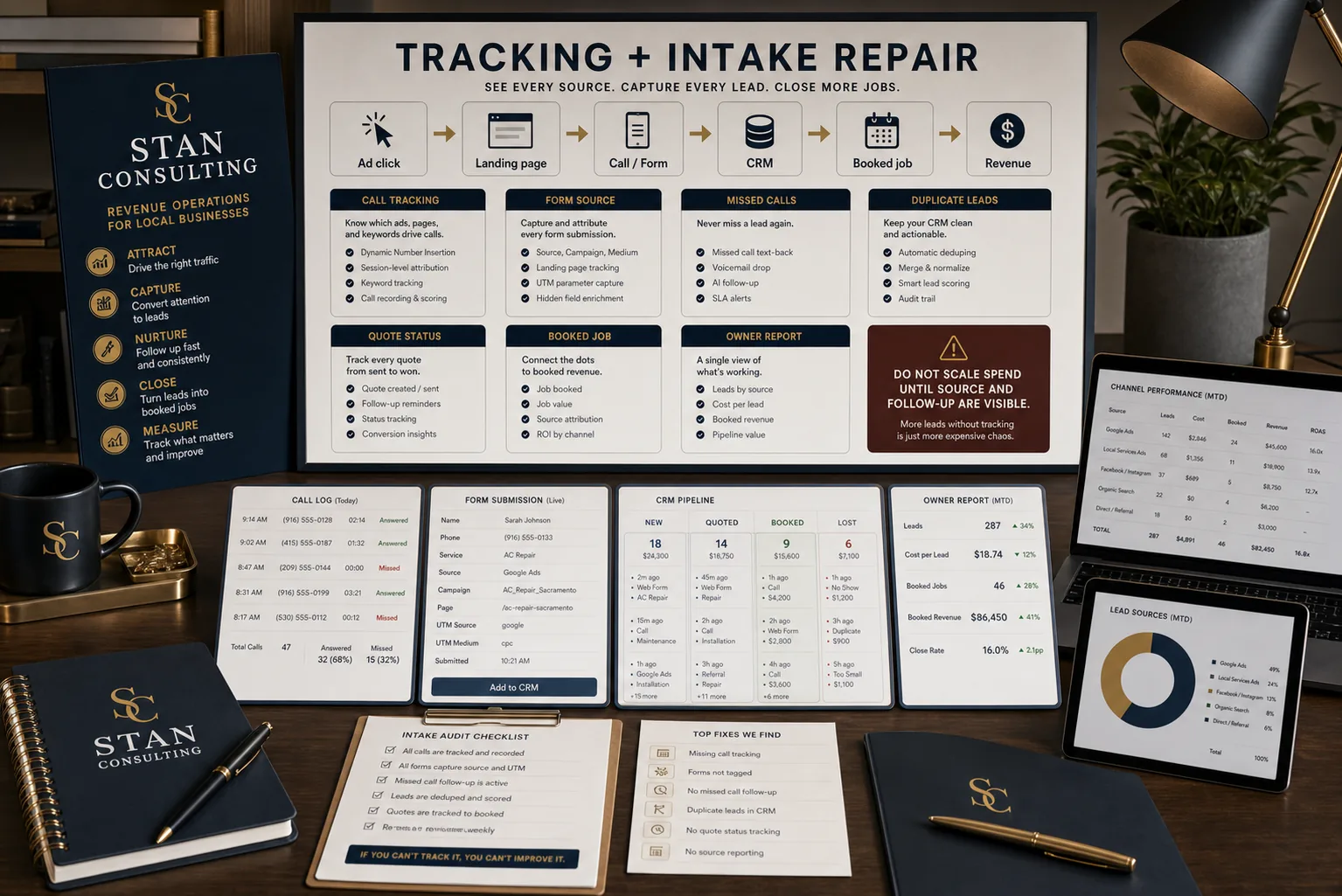
Problems

Ads

Spend is live, but lead quality, order value, or booked work is weak.

Problem

Ads not converting

Start here when the symptom is already visible in calls, forms, carts, booked work, quotes, demos, or pipeline movement.

Problem

Google Ads wasted spend

Use this when attention is reaching the business but the next buyer action is weak, delayed, confusing, or hard to measure.

Problem

Google Ads CPA rising

This helps decide which marketing surface deserves the next serious pass before more budget goes into the same path.

Problem

Local services ads eating budget

Start here when the symptom is already visible in calls, forms, carts, booked work, quotes, demos, or pipeline movement.

What is happening

Spend is live, but lead quality, order value, or booked work is weak.

What to avoid

Do not buy a bigger campaign when the symptom points to message, page, store, tracking, or follow-up friction. More traffic can make the break more expensive.

Where to go next

Move from the problem into the service page that can actually change the buyer path. The goal is a clearer next action, not another explanation.

Diagnose

What this problem usually means.

Ads is not a full diagnosis by itself. It is a visible symptom that should point to the next service path.

Find the break.

The break may happen before the click, on the page, inside the offer, during checkout, in search visibility, or after the form. The page should help narrow where attention stops becoming action.

Separate traffic from trust.

More visitors do not solve weak proof, confusing offers, poor local trust, slow reply, or unclear next steps. The problem has to be tied to the moment where the buyer hesitates.

Avoid the expensive reflex.

The expensive reflex is to buy more spend, redesign everything, or start a new channel before the constraint is named. This route keeps the next move smaller and more defensible.

Path

How to turn the problem into work.

The useful output is not another list of possible issues. It is a clearer path into the service that can change the buyer result.

If demand is weak.

Move toward paid ads, search visibility, local visibility, or AI visibility when qualified buyers are not finding the business often enough.

If conversion is weak.

Move toward website, landing page, ecommerce, Shopify, or offer-path work when buyers arrive but do not take the next action.

If response is weak.

Move toward tracking, CRM, speed-to-lead, reply, and handoff work when buyers act but the business does not turn that action into revenue.

Evidence

What to check before naming the fix.

A problem page should stop the team from treating every symptom as a campaign problem.

Check the source.

Look at where the buyer came from: paid search, paid social, maps, organic search, referral, AI answer, email, marketplace, or direct traffic. The source shapes what a reasonable next action should be.

Check the landing moment.

Review the headline, offer, proof, page speed, contact path, product detail, checkout step, form, phone number, and mobile view. Many problems are page or handoff problems wearing a traffic costume.

Check the follow-up.

If calls, forms, carts, quotes, demos, or appointment requests already happen, inspect response speed, CRM capture, attribution, reminders, proposal return, and nurture before buying more attention.

Handoff

What to send when asking for help.

The fastest path is to send the actual evidence instead of a broad description of the frustration.

Send the symptom.

Name what is not moving: calls, qualified leads, quote requests, booked jobs, sales calls, demos, carts, purchases, repeat orders, or proposal returns. The symptom should be concrete enough to inspect.

Send the surfaces.

Include the campaign, page, store, search result, map profile, AI answer, tracking report, CRM screenshot, call flow, or follow-up sequence tied to the problem.

Send the decision window.

Say whether the business needs a quick fix, a focused build, a comparison between two options, or a deeper reference before changing budget or vendors.

Route

Where this page should send the reader.

Ads should make the next click more obvious. The page earns its place when it helps a buyer, owner, or team choose the right level of detail.

Stay here for the doorway.

This page is the doorway level. It should explain the situation, name the useful paths, and prevent the reader from jumping straight into a deep page before the business action is clear.

Move down for specifics.

Move into the linked service, problem, comparison, industry, or Atlas page when the reader needs the actual mechanics, examples, tradeoffs, or proof behind the next decision.

Move sideways when uncertain.

If the next action is still unclear, move sideways into Learn or Compare. That keeps the site from overbuilding one area while leaving the broader marketing path underbuilt.

Next

Turn the problem into a path.

Problems stay light here. The fix belongs in the service layer once the visible break is clear.

Service match.

Move into the channel, page, store, visibility, or follow-up path that can change the next buyer action.

Check first.

Use a quick check when the symptom is still fuzzy or the team is arguing about the wrong cause.

Decision help.

Use comparison pages when there are two reasonable next moves and both could absorb budget.

Next

Send the page, account, store, or lead path that should be producing more.

Start a Marketing Build