Product feed
The engagement record describes work on GTIN gaps, truncated titles, product attributes and Merchant Center issues before increasing spend.
Shopify work · Source records
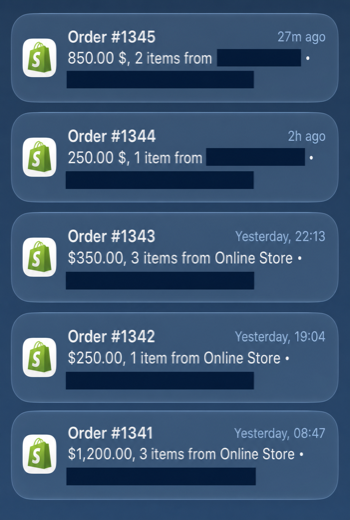
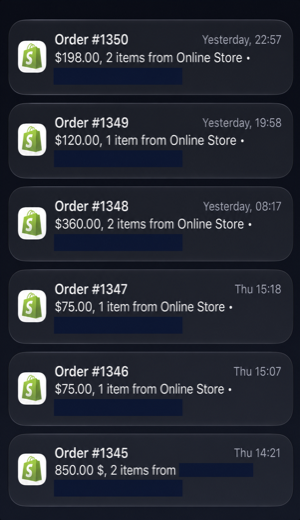
This engagement connected product-feed work, campaign structure, product pages and measurement. Two redacted Shopify notification records show ten distinct orders totaling $3,728 across 17 items.
| Order | Amount shown | Items |
|---|---|---|
| #1341 | $1,200 | 3 |
| #1342 | $250 | 1 |
| #1343 | $350 | 3 |
| #1344 | $250 | 1 |
| #1345 | $850 | 2 |
| #1346 | $75 | 1 |
| #1347 | $75 | 1 |
| #1348 | $360 | 2 |
| #1349 | $120 | 1 |
| #1350 | $198 | 2 |
| Total | $3,728 | 17 |
Source: client-supplied Shopify notification screenshots, identity redacted. The crops show relative notification times; they do not expose an absolute reporting window. The July 25 filenames and September page update do not establish the dates of the orders. These amounts do not establish profit, refunds, fulfillment or advertising attribution.
The engagement record describes work on GTIN gaps, truncated titles, product attributes and Merchant Center issues before increasing spend.
The campaign and asset-group structure was organized around product economics.
Customer and cart-abandoner data were used as audience inputs in the documented engagement.
The engagement separated the question of brand demand from non-brand acquisition so campaign reporting could be reviewed with that distinction.
These are documented work areas. The notification screenshots substantiate the order ledger, not a campaign uplift percentage. Campaign performance needs its own dated account records.
The $999 written review checks the agreed website, store or PPC problem and gives your team evidence, priorities and recommended fixes. See the paid audit and sample.
Ask for implementation scope. Buying a review is optional. Explore Shopify and PPC implementation.