PMax
Performance Max may find high-intent shoppers, but a weak product story still leaves the PDP competing on image, price, and shipping alone.
Learn · Shopify story
A Shopify PDP is not a shelf. It is the place where paid traffic decides whether the product, price, brand, and risk all make sense together.
Short answer
A Shopify brand story should answer why this product, from this store, at this price, for this buyer, now. The story belongs inside the product page, cart, proof, shipping, return, and checkout path.
Many stores think story means a long About page. The buyer rarely checks that first. The paid click lands on a product page, collection page, or campaign page. That page has to carry the relevant piece of the brand story without slowing the purchase.
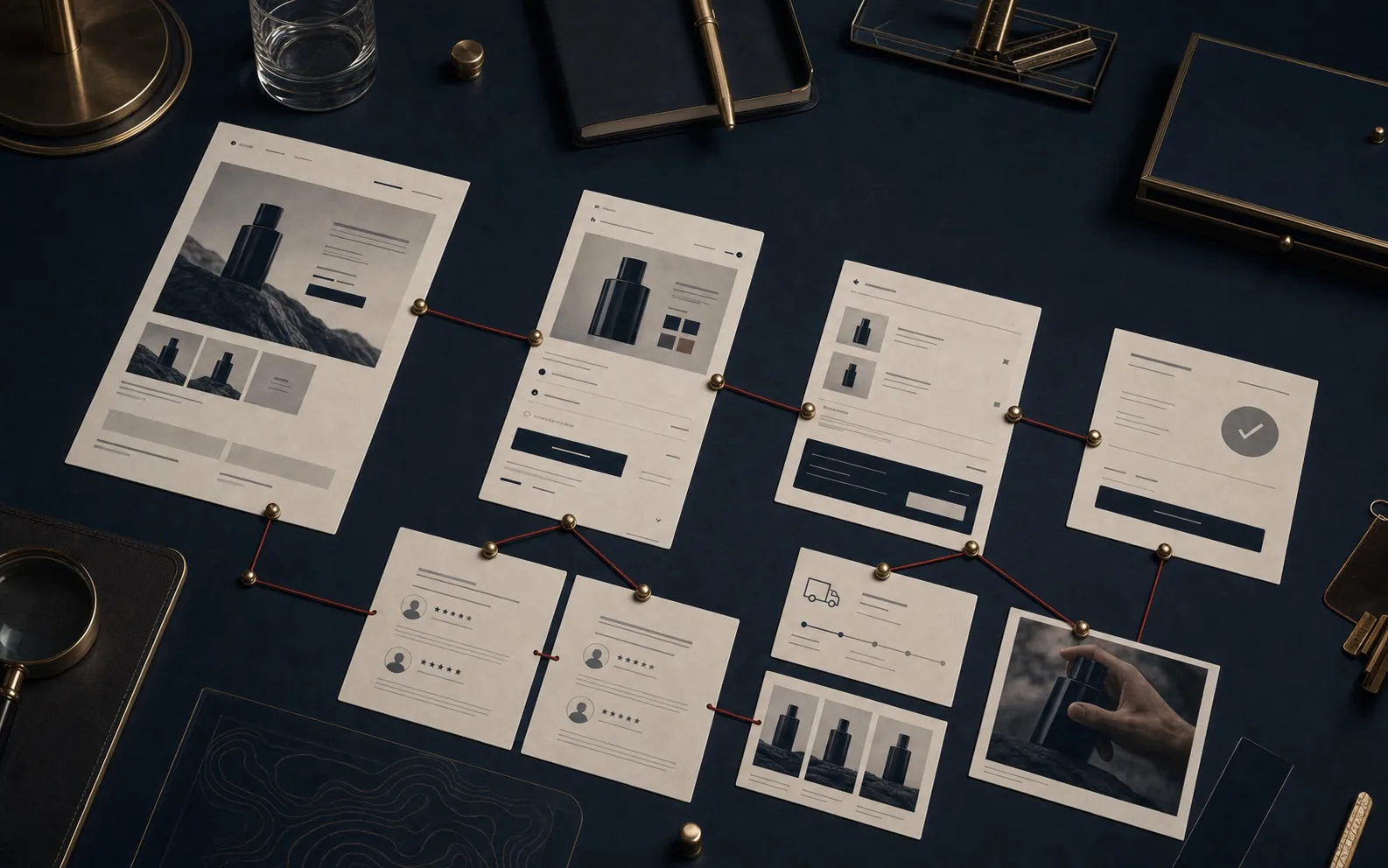
The product page should not ask the buyer to admire the founder. It should help the buyer decide. Origin, material, fit, use case, customer proof, risk reducers, comparison, guarantee language, and shipping expectation all have story jobs.
The Shopify story stack
| Store surface | Story job | What goes wrong |
|---|---|---|
| Product title and first image | Tell the buyer what the product is and who it is for. | The product looks nice but category-generic. |
| Top product copy | Explain the buying reason in one direct paragraph. | The page opens with material specs before the buyer knows why they matter. |
| Proof section | Show buyers like this buyer using or choosing the product. | Reviews exist, but the page never explains which objection they answer. |
| Cart drawer | Keep the promise alive when the buyer moves toward payment. | The cart feels like a separate app with no trust carryover. |
| Checkout support | Reduce risk without adding new persuasion. | Shipping, return, and support messages arrive too late or in a different voice. |
Paid traffic warning
Performance Max may find high-intent shoppers, but a weak product story still leaves the PDP competing on image, price, and shipping alone.
Meta can create curiosity with creative, but curiosity turns into doubt when the landing page cannot explain why this product is different.
Retargeting repeats the reminder. It does not fix the missing reason the buyer hesitated the first time.
Check next
Check whether paid traffic is meeting a store with product-level persuasion.
Open problem pageUse the audit when PDP, cart, checkout, tracking, and paid traffic all need one pass.
Open Shopify auditReview the Shopify/PMax proof only where the leak matches the case pattern.
Open Shopify proofFix the product page's buying story, then decide whether the paid account deserves more budget.
For the reference behind this judgement, see The Product Page That Explained Everything Except Why to Buy.