
Fit

Industries
Fit

Fit

Fit

Fit
Fit
Calls, quotes, service visits, missed calls, and local search.
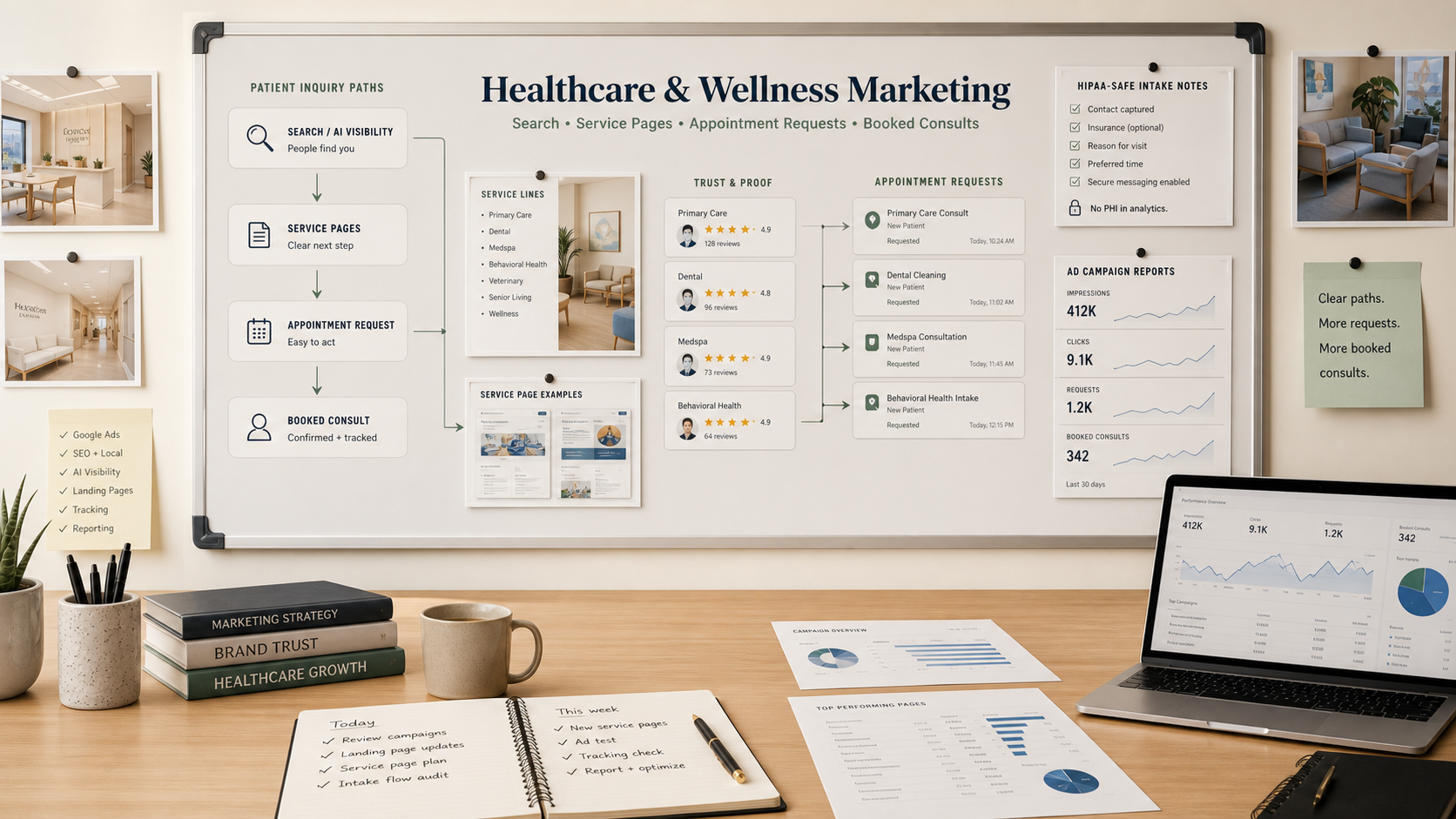
The market matters because the next customer action changes by business type. A booked job, ecommerce purchase, consult, demo, and RFQ need different paths.
Choose the exact service only after the revenue path is clear. The right build depends on what the buyer should do next.
Fit
A booked job, consult, cart, demo, RFQ, service area call, appointment, or repeat order all create different friction. The industry page should clarify that action before choosing a channel.
Some markets need reviews and proximity. Others need expertise, specification, compliance, product proof, case files, or trust signals. The service choice should match that proof standard.
The sale may depend on phone handling, quote speed, checkout clarity, demo booking, CRM follow-up, proposal return, or repeat purchase. That handoff determines the useful build.
Evidence
Look for search demand, local intent, paid traffic terms, referral patterns, marketplace behavior, AI answer presence, or repeated buyer questions. Demand evidence shows where the business should be found.
Review landing pages, service pages, product pages, quote forms, booking steps, checkout, phone paths, and proof. Conversion evidence shows why buyers hesitate after they arrive.
Inspect reply speed, CRM capture, call handling, estimate process, proposal follow-up, demo booking, appointment reminders, and repeat-order paths. Operating evidence shows whether demand is being caught.
Next
Paid traffic and search visibility paths when the business needs more qualified buyers to find it.
Website, landing page, Shopify, and ecommerce paths when attention already exists but the next action is weak.
Tracking, handoff, reply speed, and follow-up when leads or orders are leaking after first contact.
Next
Buyer check
Local service business marketing should be measured by the buyer action the business needs: a qualified inquiry, appointment, quote, order, renewal, or account conversation.
Use it when the business can name the buyer, commercial goal, delivery limits, and the evidence needed before a marketing decision.
Check demand, buyer language, proof, page or campaign fit, response ownership, measurement, and the sales outcome before adding activity.