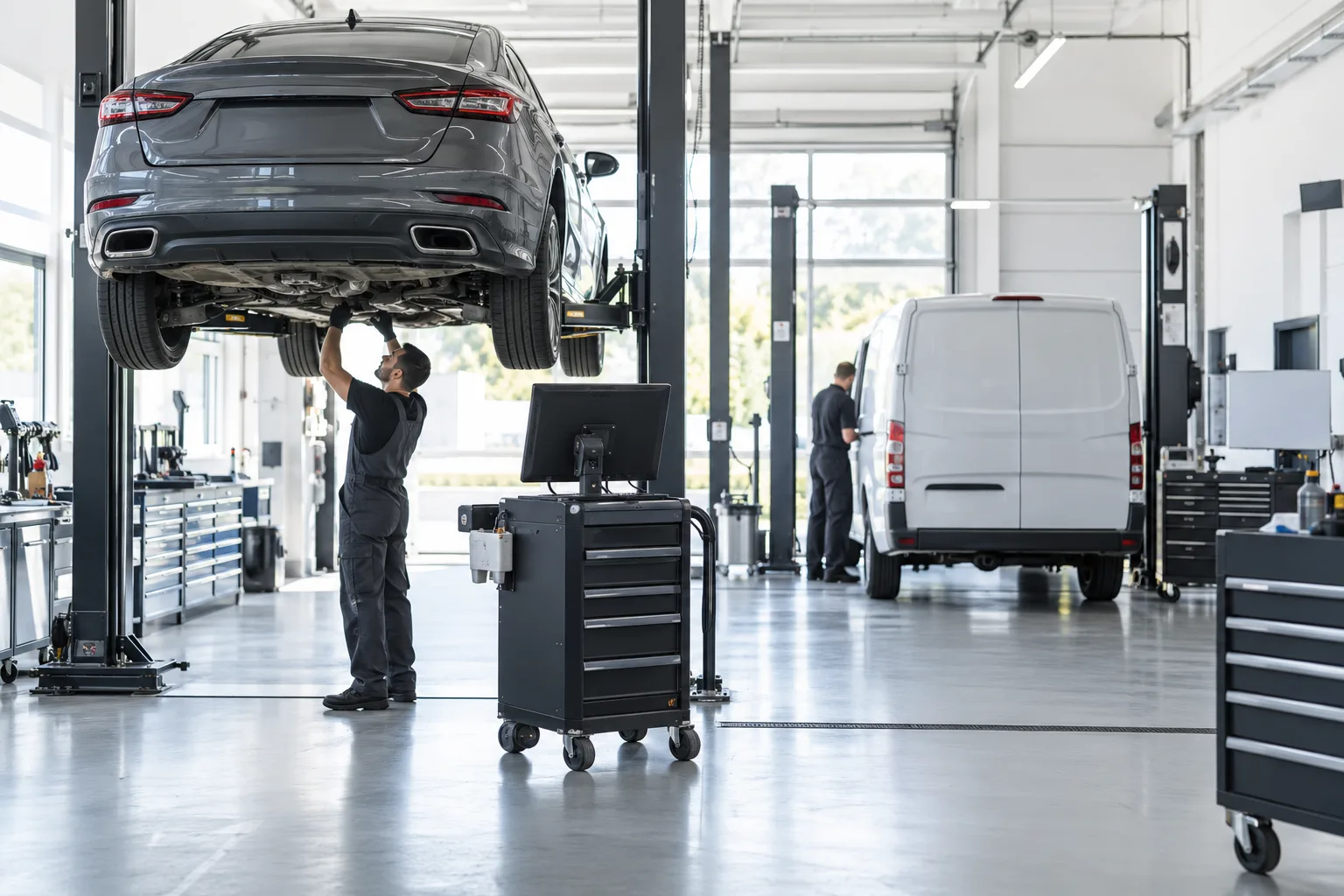
Premium auto repair inquiries to booked service appointments schematic showing Google Business Profile, Search Ads, auto repair inquiry, brake service request, check engine diagnostic, tire service request, oil change request, transmission question, fleet service request, phone inquiry, form inquiry, vehicle type, service need, urgency, bay capacity, technician notes, estimate request, warranty question, tow-in status, review request, service advisor handoff, appointment calendar, shop dashboard, service bay schedule, repair order ledger, vehicle intake checklist, diagnostic code card, estimate card, route map, review coverage, and privacy-safe reporting.

Home / Industries / Auto repair

Industry flagship page · Updated June 2026

Auto Repair Marketing Consultant

For auto repair shops, service centers, tire shops, brake specialists, transmission shops, diagnostic shops, fleet service providers, and multi-location automotive teams where repair inquiries, estimate requests, advisor handoff, and bay capacity have to become booked service appointments.

Service-need clarityAdvisor and bay fitBooked service appointments

Where the page loses the buyer

Why auto repair buyers stop before the next step.

These pages are built around the actual decision sequence: what the buyer needs to believe, what they need to compare, and what has to happen after they raise a hand.

01

The page treats every repair request like the same appointment.

Auto repair reports can show calls, forms, map visits, and ad activity while the owner still has to separate brake service, check-engine diagnostics, oil changes, tire service, transmission questions, fleet service, warranty questions, tow-ins, estimate shoppers, and bad-fit requests by hand.

  • Maintenance and diagnostic requests are mixed together
  • Urgency, tow-in status, and bay capacity are checked too late
  • Reports count appointments without showing repair-order quality or advisor fit
02

The page does not answer the shop questions.

A driver choosing a repair shop wants to know service fit, vehicle experience, diagnostic process, estimate expectations, warranty boundaries, appointment availability, review trust, and whether the shop will explain the next step before the vehicle arrives.

  • Estimate and diagnostic language is vague
  • Warranty and tow-in questions do not get clear paths
  • Tire, brake, oil, diagnostic, and fleet requests all sound the same
03

Follow-up loses the service appointment.

A shop can receive a strong inquiry and still lose the repair order when vehicle notes, service need, diagnostic context, estimate request, warranty question, tow-in status, advisor ownership, and appointment reminders are not tied to one visible path.

  • Service advisor notes do not feed the next action
  • Missed calls do not preserve vehicle and urgency context
  • Review prompts and return-service reminders live outside the report

Decision path

What an auto repair marketing page has to prove.

A serious buyer does not need more adjectives. They need a clear path from uncertainty to a next step that feels proportionate.

01

Service need before traffic

Separate brake service, check-engine diagnostics, oil changes, tire service, alignments, transmission questions, fleet service, warranty questions, tow-ins, estimate requests, referral, and bad-fit demand before judging the page or source.

02

Fit before form

Show vehicle type, service need, urgency, bay availability, diagnostic expectations, estimate process, warranty boundaries, tow-in status, service advisor owner, and what happens before the appointment.

03

Proof before service visit

Place review trust, technician depth, diagnostic process, service-line clarity, estimate language, warranty expectations, fleet context, and appointment availability where the driver decides whether to book.

04

Booked appointment before report

Track source, answer status, vehicle type, service need, urgency, estimate request, warranty question, tow-in status, advisor owner, bay fit, booked appointment, completed job, and next-service opportunity.

Premium auto repair inquiries to booked service appointments schematic showing Google Business Profile, Search Ads, auto repair inquiry, brake service request, check engine diagnostic, tire service request, oil change request, transmission question, fleet service request, phone inquiry, form inquiry, vehicle type, service need, urgency, bay capacity, technician notes, estimate request, warranty question, tow-in status, review request, service advisor handoff, appointment calendar, shop dashboard, service bay schedule, repair order ledger, vehicle intake checklist, diagnostic code card, estimate card, route map, review coverage, and privacy-safe reporting.
Auto Repair Marketing · decision path visual

Page architecture

The structure has to sell like a grown-up conversation.

The goal is not to make the page louder. The goal is to place clarity, proof, restraint, and next steps in the order a careful buyer needs them.

Sections that earn the action

Each section has a job. If a section does not remove doubt, sharpen fit, or move the buyer to the next decision, it should not be there.

HeroThe first screen should say auto repair plainly and name the decision: repair inquiry, service need, estimate fit, advisor handoff, bay capacity, and booked service appointment.
Service LinesBrake service, check-engine diagnostics, tire service, oil changes, transmission questions, fleet service, warranty questions, and tow-in requests need different proof and next-step language.
Trust DetailsReviews, diagnostic process, technician notes, estimate expectations, warranty boundaries, shop location, bay availability, and service advisor ownership should appear before the buyer is asked to book.
Follow-upThe system needs missed-call recovery, vehicle-note capture, estimate follow-up, appointment reminders, advisor handoff, review prompts, return-service reminders, and owner reporting tied to booked work.

What you can buy

An auto repair marketing diagnostic for shops that need inquiries to become booked service appointments.

Stan Consulting reviews the visible auto repair page, Google Business surface, search path, referral path, phone and form routing, service-need clarity, estimate language, warranty and tow-in paths, advisor handoff, appointment scheduling, review coverage, follow-up sequence, and privacy-safe reporting. The deliverable is a written read on where a good-fit repair inquiry becomes a price-shopper conversation, a missed call, or a lost repair order.

  • Written diagnostic, not a vague call recap.
  • Principal-led review of the public path and the follow-up logic.
  • No invented claims, fake urgency, or template promises.

Questions before contact

Plain answers before anyone books time.

01

Is this for auto repair shops or specialty service centers?

Both. It fits auto repair shops, service centers, tire shops, brake specialists, transmission shops, diagnostic shops, fleet service providers, and multi-location automotive teams.

02

Does this replace automotive legal or repair compliance review?

No. It is a marketing and intake-path diagnostic. Final repair, warranty, safety, pricing, privacy, advertising, and compliance decisions still belong with qualified professionals or the shop's internal review.

03

What should we send?

Send the auto repair website, Google Business Profile, ad or search context, referral path, call/form path, service lines, estimate process, warranty language, advisor handoff, appointment process, review process, and follow-up sequence.

Send the page that should be working harder.

Include the page URL, the form or phone path, the follow-up sequence, and the buyer action that should be happening more often.

Help me fix this