Local businesses should prepare for ChatGPT Ads and AI search by building clear pages for services, locations, buyer problems, proof, comparisons, pricing or process, and ad-specific landing pages. A generic homepage is usually too broad. The strongest path connects buyer problem -> local service page -> proof -> action.
ChatGPT Ads traffic can arrive with a specific situation already named. The page should match that situation.
People ask about tooth pain, roof leaks, custody questions, AC failure, and first-time Botox before they ask for an agency category.
Reviews, photos, licenses, service areas, process notes, and nearby work make the page easier to trust.
Schema helps clarify the entity. It cannot rescue thin service copy, missing proof, broken forms, or generic city pages.
Do not test only "best dentist near me." Test the buyer situations that lead to a call.
Being cited matters only if the buyer lands on a page that explains the next step and makes contact easy.
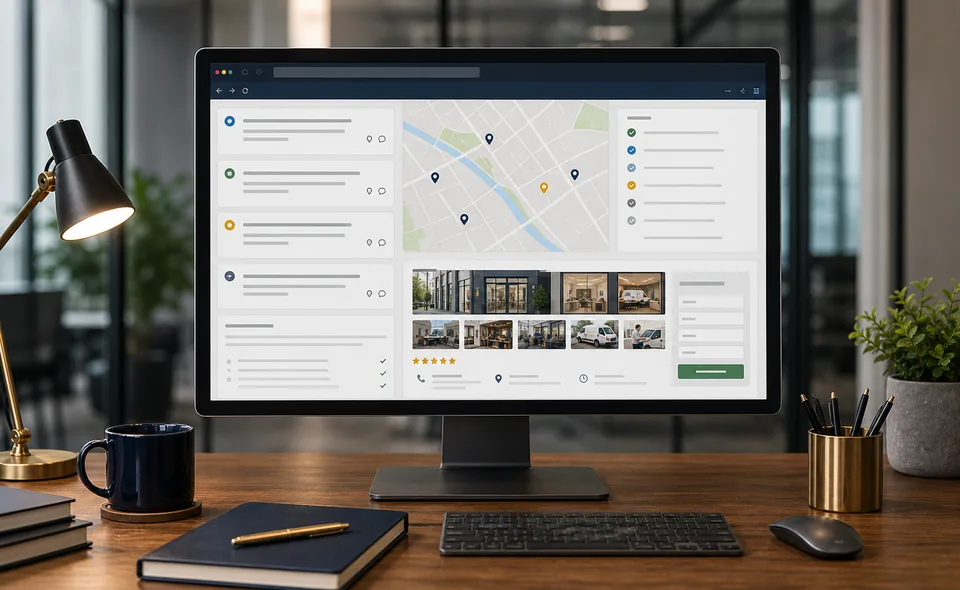
The page is usually the leak before the ad channel is
A Sacramento dentist may wonder why ChatGPT recommends another office when both offices offer emergency care and implants.
A Roseville roofer may get ad clicks and still lose the lead because the page says "quality roofing services" but does not answer emergency roof leak, insurance claim, tile roof, service area, license, response timing, and quote process.
A San Jose med spa may want AI visibility, but the site has only service names and gallery photos. AI cannot tell who the treatment is for, what result the buyer wants, what questions are common, or what makes the provider safe.
ChatGPT Ads do not fix weak pages. They send sharper questions to weak pages faster.
Local marketing used to be linear. AI search compresses the decision.
The old path was simple enough to draw on a napkin: Google search, map pack, website, call or form. The new path is messier. A buyer asks ChatGPT, compares options inside the answer, checks cited sources, clicks one page, and expects proof before they call.
AI sends people to websites after it helps them decide which businesses belong on the shortlist.
| Old local path | New AI-assisted path | What the page must do |
|---|---|---|
| Google search | ChatGPT or AI answer | Answer the exact buyer situation in plain language. |
| Map pack | AI shortlist | Show service fit, service area, proof, and trust signals. |
| Homepage visit | Specific landing page | Send the buyer to the page that matches the problem. |
| Manual comparison | AI pre-comparison | Make comparisons, FAQs, and process details easy to extract. |
| Call or form | Call or form after proof | Put the action where the buyer has enough trust to move. |
Why local websites usually fail AI search
Most local websites were built to exist. AI search rewards pages that explain the business, the buyer situation, the local proof, and the next action.
"Compassionate care" and "quality service" do not tell AI or a buyer which problem you solve today.
The page names the service but skips who it is for, when it is needed, what happens next, and why this business is credible.
Changing the city name does not create local authority. AI can chew through that page and move on.
The reviews live on Google, photos live on Instagram, license sits in a footer, and the page itself asks for trust without showing it.
Real buyers ask timing, cost, risk, process, comparison, and "do I need X or Y" questions.
A page about every service cannot close a buyer asking about tooth pain tonight or a ceiling stain after rain.
The local AI conversion structure
The website does not need hundreds of pages first. It needs the right page types in the right order. Each page should help AI understand the business and help the buyer move toward a call, quote request, appointment, booking, or consultation.
Business, service area, main services, proof, and primary action.
One page per service, built around problem, process, proof, and CTA.
Local condition, service fit, nearby proof, and quote or appointment path.
Answer the buyer question before they know the service name.
Case files, before and after pages, review summary, process, credentials.
Cost, timing, safety, comparison, next step, and "do I need X or Y" questions.
Roofer vs plumber, Botox vs filler, implant vs bridge, repair vs replacement.
What affects price, how quotes work, what happens after the form.
Licenses, insurance, review patterns, associations, provider credentials.
One page per major buyer situation, with tracking and fast contact.
What each page type should do
Homepage
The homepage should not carry the whole business. It should state what the business does, where it serves, who it helps, which problems it solves, which proof the buyer can inspect, and what action the visitor should take next.
For a Sacramento dental office, useful homepage language is closer to: "Family and cosmetic dentistry in Sacramento for cleanings, crowns, implants, emergency dental pain, and smile restoration."
"Creating beautiful smiles with compassionate care" can support the brand. It should not be the only thing AI or a rushed buyer has to work with.
Core service pages
Each main service needs its own page. A dentist needs pages for implants, emergency dentistry, crowns, Invisalign, teeth whitening, and family dentistry. A roofer needs roof repair, roof replacement, emergency roof leak repair, commercial roofing, storm damage repair, and inspections.
Who the service is for, what problem it solves, signs the buyer needs it, local proof, process, timing, pricing expectations or quote logic, FAQs, and CTA.
A page that says "we do roofing" is weaker than a page that explains emergency leak repair, tile roof damage, storm response, photos, license, and inspection timing.
Service and location pages
Do not build garbage city pages. "Roof repair in Folsom. We offer roof repair in Folsom. Call us for roof repair in Folsom." is not local authority. It is copied wallpaper.
The page AI ignores
Roof repair in Roseville. We offer quality roof repair. Call today.
The page AI can use
Roof repair in Roseville for active leaks, tile roof damage, flashing problems, storm damage, and inspection requests. Includes service area, response timing, licensing, photos, reviews, and quote path.
Problem pages
People do not always ask for the service name. They ask what their problem means. A homeowner asks, "Do I need a roofer or plumber for a ceiling stain after rain?" A patient asks, "What should I do if my crown fell out?" A med spa buyer asks, "Botox or filler for forehead and cheeks?"
Problem pages are where AI can match real questions to the business before the buyer knows the right category.
Proof pages
Local businesses often have proof, but it is hidden. Create pages or sections for case files, before and after photos, project galleries, review summaries, process pages, licensing, insurance, certifications, and service-area proof.
A proof page should read like a useful record, not a brag wall. For a roofer, "Roseville Roof Replacement: Tile Roof Removed, Decking Repaired, New Underlayment Installed" is stronger than a generic gallery. For a dentist, "Sacramento Dental Implant Patient: Missing Molar Replacement Timeline" gives AI and humans the context they need.
FAQ, comparison, pricing, and process pages
FAQ pages should answer buyer questions, not admin questions alone. "Do you offer free estimates?" is useful, but it is not enough. Add questions about speed, cost drivers, safety, service choices, risk, timing, and what happens next.
Comparison pages matter because AI often compares options: crown vs filling, roof repair vs replacement, Botox vs filler, emergency dentist vs urgent care, roof inspection vs roof certification. Be honest. Do not force every answer toward your service.
Same structure, different local business
The structure stays the same. The buyer question, proof, and CTA change by business type.
- Required page
- Emergency dental pain or dental implant consultation page.
- Proof needed
- Provider credentials, reviews, insurance or payment notes, timeline.
- CTA
- Request appointment or consultation.
- Required page
- Roof leak problem page and roof inspection page.
- Proof needed
- License, photos, nearby work, storm process, inspection timing.
- CTA
- Request roof inspection.
- Required page
- First Botox consultation page.
- Proof needed
- Provider credentials, safety notes, consultation process, common questions.
- CTA
- Book consultation.
- Required page
- Emergency AC repair page.
- Proof needed
- Service area, same-day limits, technician process, repair vs replace logic.
- CTA
- Request service call.
- Required page
- Custody consultation and custody FAQ pages.
- Proof needed
- Attorney profile, jurisdiction, process, intake expectations.
- CTA
- Request consultation.
- Required page
- Kitchen remodel planning page.
- Proof needed
- Project photos, process, budget drivers, permit and timeline notes.
- CTA
- Request planning call.
Do not send every ChatGPT Ad to the homepage
ChatGPT Ads landing pages should match the conversation intent. If the ad promise is emergency tooth pain, the page should be about emergency tooth pain. If the ad promise is roof leak inspection after rain, the page should not be a generic roofing homepage.
| Conversation intent | Ad promise | Landing page |
|---|---|---|
| Tooth pain tonight | Emergency dental appointment request | Emergency dental pain page |
| Ceiling leak after rain | Roof leak inspection | Roof leak inspection page |
| First Botox visit | First-time Botox consultation | Botox consultation page |
| AC not cooling | Emergency HVAC repair | AC repair page |
| Kitchen remodel planning | Planning call for remodel scope | Kitchen remodel planning page |
If the page says everything, it sells nothing.
Each ad landing page needs an exact promise, local fit, who it is for, who it is not for, proof, process, FAQ, tracking, CTA, and a fast contact option.
Technical setup for AI search and ChatGPT Ads
The technical layer matters because a page cannot be cited or validated if important systems cannot access it. Start with the boring checks: crawlable pages, valid sitemap, clean canonical URLs, no accidental noindex, fast mobile pages, working forms, visible phone number, and no broken images.
Official source check: OpenAI documents OAI-SearchBot for ChatGPT search features and OAI-AdsBot for validating pages submitted as ads. OpenAI also says OAI-AdsBot page data is not used to train generative AI foundation models. See OpenAI crawler documentation and OpenAI Ads documentation.
Source checked: June 24, 2026.
A practical robots.txt block for a local business preparing for ChatGPT search and ad landing page review can include:
User-agent: OAI-SearchBot
Allow: /

User-agent: OAI-AdsBot
Allow: /

User-agent: GPTBot
Allow: /

User-agent: ChatGPT-User
Allow: /
Use OAI-SearchBot for ChatGPT search visibility controls. ChatGPT-User is user-initiated and OpenAI says robots.txt rules may not apply to it the same way, so do not treat that line as your Search opt-out control.
Schema setup
Schema should clarify the entity and page role. Use LocalBusiness, ProfessionalService, Service, FAQPage, BreadcrumbList, WebPage, Organization, Person for provider pages, and ImageObject for proof visuals where appropriate. Medical, legal, home-service, and review schema should be accurate and compliant. Do not fake ratings. Do not invent reviews.
AI reads more than your website
Owned pages are the base. They are not the whole citation system. Local businesses also need trustworthy external mentions where AI and buyers can confirm the business exists and has a record.

| Owned pages | Third-party mentions | Community and reviews |
|---|---|---|
| Service pages | Google Business Profile | Google reviews |
| Problem pages | BBB, Yelp, niche directories | Reddit or neighborhood discussions when natural |
| Proof pages | Supplier, certification, association pages | Facebook groups or customer photos when public and appropriate |
| FAQ pages | Local chamber or local news | Review-platform questions and answers |
The goal is presence when the buyer asks the buying question. Rank position is one signal. Citation presence, local proof, and page fit are the harder win.
Do not test generic prompts. Test buyer situations.
Generic prompts create fake confidence. A real buyer prompt carries urgency, context, service area, risk, and comparison. Test the prompts that would cause someone to call.
Weak prompt testing
- Best dentist near me
- Best roofer
- Best med spa
- Best HVAC company
Better prompt testing
- Who should I call if my crown fell out in Sacramento?
- Do I need a roofer or plumber for a ceiling stain after rain in Roseville?
- What should I ask before getting Botox for the first time in San Jose?
- Who can fix AC not cooling today in Folsom?
Track whether the business appears, which competitors appear, which sources are cited, what claims are made, what questions AI asks back, and which landing page would be the right match.
What to build first
If the site is messy, do not start by creating fifty city pages. Build the page path that can handle the next real buyer.
Say what the business does, where it serves, who it helps, and what action to take.
Start with the services that already create calls, appointments, quotes, or sales.
Answer the questions buyers ask before they know the service name.
Put proof on the page instead of leaving all trust on third-party profiles.
Cover cost, timing, next steps, risks, and choice points.
Make sure important systems and real buyers can access the page.
Run real buyer situations and log what AI understands, misses, and cites.
Create a page for each major buyer situation before paid traffic is tested.
Track form submit, phone click, booking click, quote request, directions click, ad landing page visit, proof page click, and return visit.
Only test spend after the page, proof, tracking, and response process are ready.
When to run ChatGPT Ads
Run ads when the landing page matches the ad, the page explains the service clearly, proof is visible, phone and form work on mobile, tracking is installed, reviews are easy to inspect, pricing or process expectations are explained, and the business can answer the lead.
Wait when the site is generic, proof is missing, service pages are thin, local relevance is weak, forms are broken, calls go unanswered, tracking is absent, or every ad would point to the homepage.
FAQ
Should a local business build ChatGPT Ads pages before service pages?
No. Build the core service and problem pages first. Ad landing pages work better when they can pull from a clear service structure, local proof, FAQs, and process pages.
How many local service-location pages should I build?
Start with the cities or neighborhoods where the business actually serves buyers and has something specific to say. A few strong pages beat dozens of copied city pages.
Can AI search cite a homepage?
Yes, but a homepage is often too broad for specific buyer questions. AI search is more likely to find a useful answer on a page that matches the exact service, location, problem, proof, or comparison.
Do local businesses need third-party mentions?
Yes. Owned pages help explain the business. Third-party mentions, reviews, directories, association pages, supplier listings, and local profiles help confirm that the business is real and trusted.
Is llms.txt required for AI search?
No single file replaces clear pages, crawl access, internal links, source clarity, and local proof. Machine-readable files can help explain the site, but they should support the website structure rather than hide weak pages.
What should I track after ChatGPT Ads traffic starts?
Track ad landing page visits, UTM source and campaign, form submits, phone clicks, booking clicks, quote requests, proof page clicks, return visits, and whether the leads match the buyer situation promised in the ad.
Stan Consulting can build the local AI search and ChatGPT Ads website path before you spend money sending traffic to weak pages. Start with the page map, proof structure, landing pages, tracking, and local conversion path.
Build the local AI-ready website path or see local business marketing services.