When is this the right fit?
It fits when a store has products, traffic, carts, ads, email, or marketplace activity, but buyers are not moving cleanly from product interest to purchase and repeat purchase.
Home / Services / Ecommerce and Shopify services
Ecommerce and Shopify services
Use this page when a store has products, traffic, carts, ads, email, or marketplace activity, but buyers are not moving cleanly from interest to purchase.
Quick answer
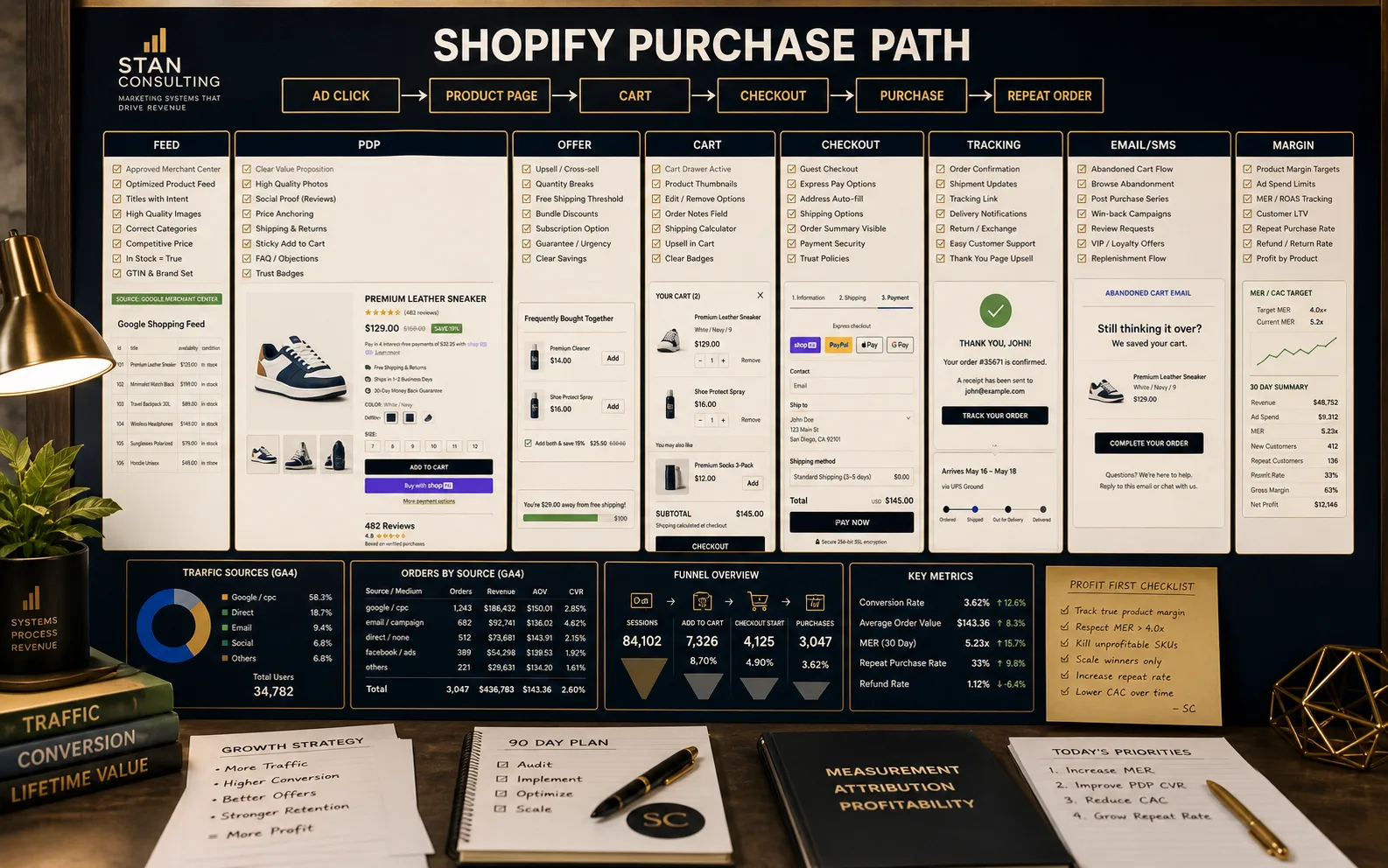
Ecommerce, Shopify, and marketplace marketing services connect product demand to purchases by tightening the product page, traffic source, checkout path, email follow-up, tracking, and next revenue action. Stan Consulting uses the request to decide whether the first build belongs in ads, product pages, Shopify CRO, Klaviyo, or the store purchase path.
It fits when a store has products, traffic, carts, ads, email, or marketplace activity, but buyers are not moving cleanly from product interest to purchase and repeat purchase.
The first build may be the product page, offer, feed, paid traffic path, cart, checkout, tracking, email follow-up, or marketplace handoff.
Share the store URL, top products, ad channels, email setup, monthly traffic, current sales path, tracking setup, and the point where buyers drop.
Build the store path that turns product interest into purchases, repeat orders, and cleaner revenue tracking.Updated July 4, 2026 | Ecommerce marketing service
Answer first
A store owner can install apps and themes. The harder work is deciding why traffic is not buying and which page, offer, feed, email, or ad system should change first.
Marketing services
Start at the page that matches the buyer problem. If the problem is mixed, share the situation through the request form instead of guessing.
Main Shopify/ecommerce page for traffic, product pages, ads, CRO, and purchase path.
Open Shopify Ecommerce MarketingBroad ecommerce marketing support across store, traffic, email, tracking, and conversion.
Open Ecommerce MarketingStore conversion marketing plan when visitors browse but do not buy.
Open Shopify CROBuild or tighten the store path from product page to cart to purchase.
Open Shopify Conversion BuildPaid traffic for Shopify tied to feed, PMax, Shopping, product pages, and ROAS quality.
Open Shopify Marketing PPCRevenue follow-up for welcome, cart, post-purchase, winback, and segments.
Open Email and Klaviyo MarketingShopify traffic no sales · Shopify store not converting · Shopify PMax vs Google Shopping · Shopify CRO
What to share
The store URL, top products, ad channels, email setup, monthly traffic, current sales path, and the point where buyers drop.
The first decision is which service should own the build: channel work, page work, store work, tracking, follow-up, consulting, or build scope.
Objections
Shopify is the clearest public request, but the work can cover ecommerce traffic, product pages, email, conversion, tracking, and marketplace-adjacent marketing.
The page is for revenue handoff work. Store setup only matters when it supports product-page clarity, purchase path, tracking, or marketing launch.
Yes. Share the marketplace, catalog, feed, ads, and purchase path. If the work needs a separate Amazon or marketplace build, Stan Consulting will scope it from the request.
The request should start with the real purchase path. That is how the next build step stays clear.
Request a quoteBuyer check
Ecommerce marketing connects product demand to purchases should connect product demand, merchandising, product pages, cart and checkout behavior, margin, and repeat purchase evidence.
Use it when the store has a defined product, workable fulfillment, and enough order data to separate a traffic problem from a purchase-path problem.
Check product and collection performance, traffic source, add-to-cart, checkout, order value, margin, returns, and repeat purchase before changing spend.